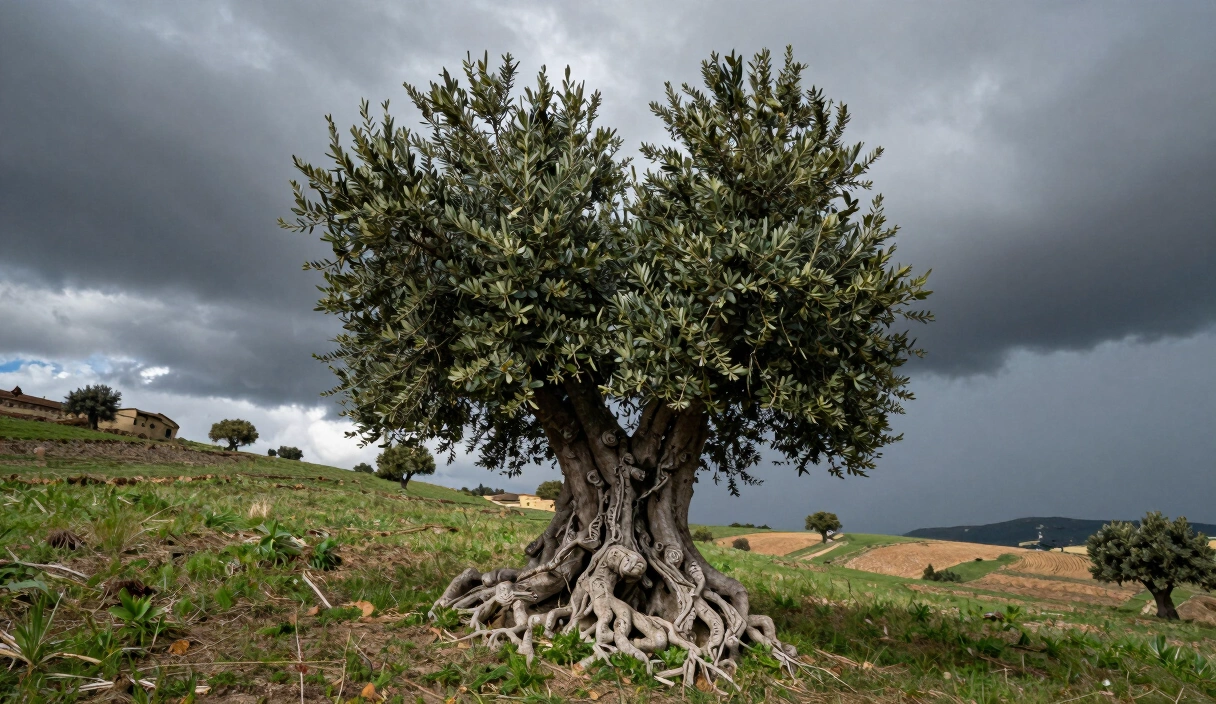
Bible Verses About Faith: 15 Scriptures for Every Season of Belief
These 15 bible verses about faith come with the history, original language, and context — written by people whose faith was tested before it was published.
Contents
Faith is not belief without evidence. That definition gets thrown around in debate halls and internet arguments, but it isn’t what the Bible says. The writer of Hebrews defined it precisely — hypostasis, a Greek word that means foundation, the load-bearing structure underneath something. Faith in Scripture is the thing you stand on when the floor drops out. Not a guess. A weight-bearing decision.
If you’re looking for bible verses about faith, you probably aren’t looking for theology. You’re looking for traction — something to grip when the ground shifts. These fifteen verses were written by people who found that grip: prisoners, exiles, prophets who watched their warnings come true, and apostles who bet their lives on something they couldn’t prove and refused to take back.
What the Bible Means by “Faith”
English flattens the word. The biblical writers didn’t.
In Hebrew, the root aman gives us emunah — often translated “faith” or “faithfulness.” But the word’s core meaning is firmness. Stability. Something you lean into that doesn’t move. When Exodus 17:12 describes Moses’ hands as “steady” during battle, the word is emunah. Faithful hands. Hands that didn’t drop.
In Greek, pistis covers both belief and trust — the conviction that something is true and the willingness to act on it. The New Testament doesn’t separate intellectual agreement from behavioral commitment. You can’t have one without the other. James made that explicit, and Paul assumed it.
The distinction matters because modern English splits faith into “blind belief” and “rational trust.” The Bible does neither. Biblical faith is informed, tested, and proven through endurance — and the verses below demonstrate that at every stage.
The Foundation: What Faith Is
Hebrews 11:1
“Now faith is the substance of things hoped for, the evidence of things not seen.”
The most quoted definition of faith in the Bible. The word “substance” — hypostasis — literally means “standing under.” A foundation. Not a feeling, not a wish — the load-bearing structure beneath everything you hope for but can’t yet see. And “evidence” — elenchos — is a legal term. Proof. The kind that holds up in court. The writer of Hebrews is making a philosophical claim: faith itself constitutes evidence. Not in place of evidence. As evidence.
This verse opens what scholars call the “faith hall of fame” — Hebrews 11, a catalog of people who acted on unseen realities and were vindicated. Abel, Enoch, Noah, Abraham, Sarah. None of them had proof in the modern scientific sense. All of them had hypostasis. For the full verse-by-verse breakdown of what Hebrews 11:1 means, it appears in our treatment of the most searched passages.
Hebrews 11:6
“And without faith it is impossible to please God, because anyone who comes to him must believe that he exists and that he rewards those who earnestly seek him.”
Two requirements. Not five, not twelve. Believe God exists. Believe he responds to seeking. The writer of Hebrews set the threshold lower than most people expect. The word “rewards” — misthapodotes — describes someone who pays what’s owed. Not a bonus. A wage. The seeking earns the finding.
Romans 1:17
“For in the gospel the righteousness of God is revealed — a righteousness that is by faith from first to last, just as it is written: ‘The righteous will live by faith.’”
Paul quoting Habakkuk 2:4 — a verse written six hundred years earlier by a prophet furious at God for allowing injustice. Habakkuk demanded answers. God’s response was essentially: trust me, and wait. The righteous will live by emunah. Firmness. Not by explanations.
Paul took that Old Testament principle and built his entire theological framework on it. Martin Luther read this verse in 1515 and it restructured Western Christianity. The same four words — “the righteous by faith” — appear in Romans, Galatians, and Hebrews. Three books, one thesis: right standing with God isn’t earned by performance. It’s received by trust.

Faith When You Can’t See
2 Corinthians 5:7
“For we live by faith, not by sight.”
Seven words. Paul wrote them to a church in Corinth that was obsessed with visible proof — impressive speakers, dramatic miracles, outward credentials. His response was blunt: that’s not how this works. The Greek eidos — “sight” — means visible form, outward appearance. Paul’s claim is that the Christian life operates on a different sensory register entirely.
Romans 8:24-25
“For in this hope we were saved. But hope that is seen is no hope at all. Who hopes for what they already have? But if we hope for what we do not yet have, we wait for it patiently.”
Paul defining the relationship between faith and hope — they’re siblings, not synonyms. Faith is the foundation (Hebrews 11:1). Hope is what you build on it. And the waiting — hypomone, endurance under pressure — is the proof that both are real. If you already had it, you wouldn’t need faith. The absence of the thing is what makes the trust meaningful.
Mark 11:22-24
“Have faith in God,” Jesus answered. “Truly I tell you, if anyone says to this mountain, ‘Go, throw yourself into the sea,’ and does not doubt in their heart but believes that what they say will happen, it will be done for them.”
The mountain verse. Quoted millions of times, usually out of context. Jesus said this the morning after cursing a fig tree that withered overnight — a visual parable about fruitlessness. The “mountain” most scholars identify is the Mount of Olives, which in Jewish eschatology would split apart when God acted decisively (Zechariah 14:4). Jesus wasn’t giving a formula for getting what you want. He was describing what happens when faith aligns with God’s purposes. The mountains that move are the obstacles between God’s people and God’s plan.
Recommended Resources

Be Strong and Courageous Farmhouse Wall Sign
Large farmhouse-style wooden sign with Joshua 1:9 verse, distressed finish for rustic home decor.
Check Price on AmazonAs an affiliate, we earn on qualifying purchases.

XKDOUS Bible Verses Jar Kit — 270 Selected Verses
Jar with 270 hand-selected Bible verses for daily encouragement — ideal as a Christian graduation or friendship gift.
Check Price on AmazonAs an affiliate, we earn on qualifying purchases.

NIV Study Bible, Fully Revised Edition, Hardcover
Comprehensive study Bible with over 20,000 notes, book introductions, and full-color maps.
Check Price on AmazonAs an affiliate, we earn on qualifying purchases.
Faith and Action
James 2:17
“In the same way, faith by itself, if it is not accompanied by action, is dead.”
James, the brother of Jesus, writing to Jewish Christians scattered across the Roman Empire. This verse has caused more theological arguments than almost any other — does it contradict Paul’s “saved by faith alone”? It doesn’t. Paul and James are answering different questions. Paul asks: how does a person receive right standing with God? By faith. James asks: how do you know faith is genuine? By its fruit. A tree that produces nothing isn’t a tree that needs better soil. It’s dead wood.
The Greek word for “dead” — nekros — is the same word used for a corpse. Not dormant. Not sleeping. Dead. James isn’t describing weak faith. He’s describing no faith at all.
James 2:26
“As the body without the spirit is dead, so faith without deeds is dead.”
James’ summary illustration. A body without breath is a corpse. Faith without action is the spiritual equivalent. The analogy is precise — the deeds don’t create the faith any more than breath creates the body. But without them, there’s no life present.
Matthew 17:20
“He replied, ‘Because you have so little faith. Truly I tell you, if you have faith as small as a mustard seed, you can say to this mountain, “Move from here to there,” and it will move. Nothing will be impossible for you.’”
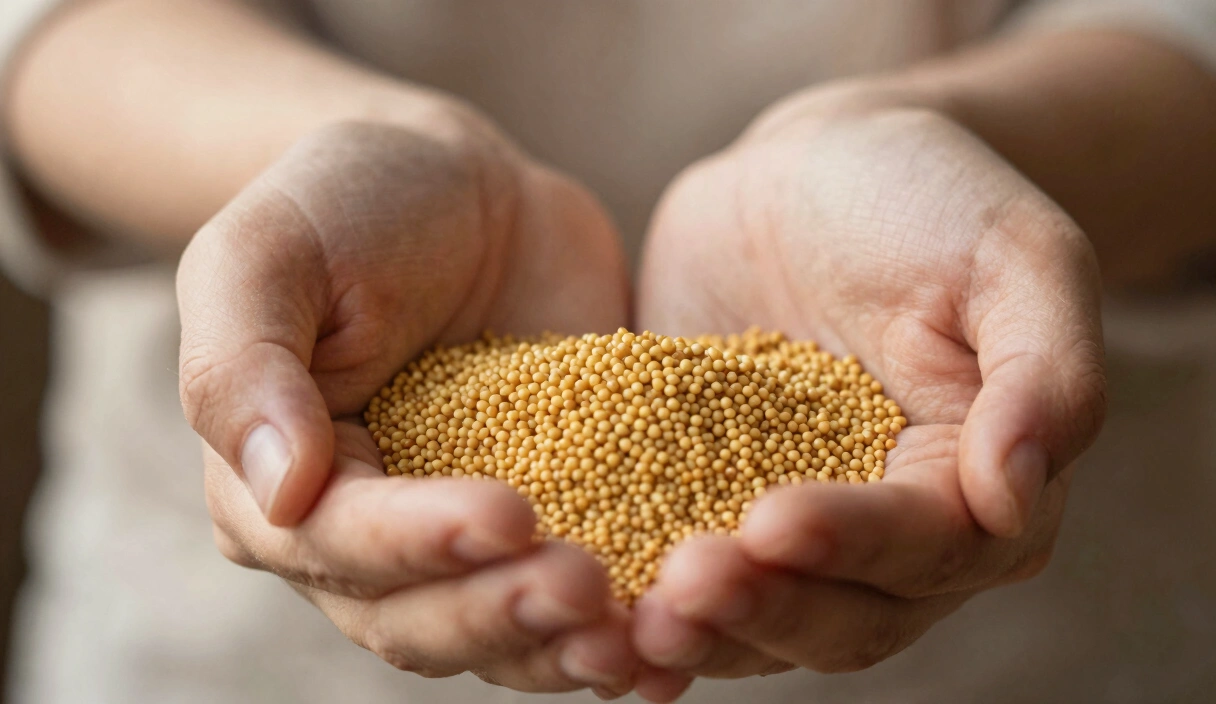
Jesus to his disciples after they failed to cast out a demon. The mustard seed was the smallest seed in Palestinian agriculture — barely visible. Jesus’ point isn’t about quantity. It’s about authenticity. A tiny amount of real faith outperforms a mountain of religious performance. The disciples’ problem wasn’t insufficient faith. It was misplaced confidence — in their own ability rather than in God’s.
Faith Under Pressure
These verses were written by people whose faith was actively being crushed — and held.
1 Peter 1:6-7
“In all this you greatly rejoice, though now for a little while you may have had to suffer grief in all kinds of trials. These have come so that the proven genuineness of your faith — of greater worth than gold, which perishes even though refined by fire — may result in praise, glory and honor.”
Peter writing to persecuted Christians across five Roman provinces. The metallurgy metaphor is exact: gold is refined by heating it until impurities rise to the surface and can be skimmed off. The fire doesn’t create the gold. It reveals it. Peter’s claim about suffering is the same — trials don’t create faith. They prove whether it’s genuine. And genuine faith, he says, is worth more than the gold that survives the same process.
Habakkuk 2:4
“See, the enemy is puffed up; his desires are not upright — but the righteous person will live by his faithfulness.”
The verse Paul later quoted in Romans. But the original context is darker. Habakkuk was watching the Babylonian empire destroy everything in its path — including God’s own people. He demanded to know why. God’s answer came in two parts: the arrogant will fall, and the faithful will endure. Not “the faithful will be rescued.” The faithful will live. In Hebrew, the distinction matters. Emunah here means steadfast endurance, not escape. Faith as survival, not extraction.
Galatians 5:22-23
“But the fruit of the Spirit is love, joy, peace, forbearance, kindness, goodness, faithfulness, gentleness and self-control.”
Faith appears here not as something you generate but as something that grows in you — a fruit of the Spirit’s presence. Paul lists it alongside love, joy, and peace — all things that develop over time with cultivation. The word pistis in this context carries the sense of reliability, trustworthiness. Not just believing in God but becoming the kind of person others can believe in. For how strength and faith interweave in Scripture, the pillar article in this cluster traces that relationship verse by verse.
The Faith That Saves
Ephesians 2:8-9
“For it is by grace you have been saved, through faith — and this is not from yourselves, it is the gift of God — not by works, so that no one can boast.”
Paul’s clearest statement on how salvation works. Three elements: grace (God’s initiative), faith (the human response), and gift (the mechanism). The grammar in Greek is debated — does “this” refer to faith itself being the gift, or to the entire salvation process? Most scholars lean toward the latter, but the practical effect is the same: even the capacity to trust is something received, not manufactured.
Romans 10:17
“Consequently, faith comes from hearing the message, and the message is heard through the word about Christ.”
Faith has a source. It doesn’t appear from nowhere. Paul locates it specifically: akoe, hearing. The word implies active listening, not passive exposure. And the content that generates faith isn’t generic inspiration — it’s specific: the word about Christ. Paul’s claim is that faith is a response to a specific message, not a personality trait some people have and others don’t. Anyone who hears can believe. That’s the premise.
Proverbs 3:5-6
“Trust in the Lord with all your heart and lean not on your own understanding; in all your ways submit to him, and he will make your paths straight.”
Solomon’s instruction to his son. The Hebrew word for “trust” — batach — means to throw yourself onto something with your full weight. Not intellectual agreement. Physical reliance, like falling backward into someone’s arms. “Lean not on your own understanding” is a prohibition against making yourself the final authority on your own life. And “make your paths straight” — yashar — means to level, to grade, to smooth like a road. Not “show you the right path.” Clear the path you’re already on. If hope is what you’re looking for beyond faith, that collection picks up exactly where these verses leave off.
Every person in Hebrews 11 died. Abel was murdered. Abraham never saw the full promise. Moses never entered the land. The writer of Hebrews calls them all heroes of faith — not because everything worked out, but because they acted on what they couldn’t see and didn’t quit when it cost them everything.
That’s the faith these verses describe. Not a feeling you summon. Not a formula you follow. A weight-bearing decision to trust something you can’t prove and refuse to let go when the pressure comes. If you’re in a season where faith feels thin, pick one verse. Not fifteen. The one that answered back when you read it. That’s where it starts.
Related Articles
- Hebrews 11:1 Meaning: Now Faith Is the Substance of Things Hoped For
- Joshua 1:9 Meaning: Be Strong and Courageous
- Bible Verses About Trust When Everything Feels Uncertain
- Bible Verses About Prayer and How God Hears You
- Bible Verses About the Holy Spirit and His Work in You
- Bible Verses About Doubt When Your Faith Feels Thin
Frequently Asked Questions
What is the most important Bible verse about faith?
Hebrews 11:1 holds that distinction — it’s the Bible’s own definition of faith: “the substance of things hoped for, the evidence of things not seen.” The Greek hypostasis (substance) means a load-bearing foundation, not a vague hope. Romans 1:17 — “the righteous will live by faith” — is arguably equally foundational, since Paul, the writer of Hebrews, and Habakkuk all built on it. For a complete treatment of how these verses became culturally famous, see most popular Bible verses.
What does the Bible say about faith vs. doubt?
The Bible doesn’t treat doubt as the opposite of faith — unbelief is. Doubt is a question; unbelief is a decision. Habakkuk 2:4 was written by a prophet furious with God who still chose to trust. Jesus’ disciples doubted regularly (Matthew 14:31, Mark 9:24) and weren’t rejected for it. The father in Mark 9:24 said “I believe; help my unbelief” — and Jesus healed his son anyway. Faith in Scripture coexists with honest questions.
Is faith a feeling or a choice?
In biblical language, it’s a choice that may or may not include feelings. The Hebrew emunah means firmness, steadfastness — a posture, not an emotion. The Greek pistis combines conviction with trust and active commitment. Galatians 5:22 lists faithfulness as a fruit of the Spirit — something that grows, not something you feel instantly. Paul wrote about faith from a prison cell, not a mountaintop.
What is the difference between faith and trust in the Bible?
In English, they’re distinct words. In Hebrew, emunah covers both — faithfulness, reliability, steadfastness. In Greek, pistis (faith/belief) and pisteuo (to trust/believe) share the same root. The Bible doesn’t draw a hard line between believing God exists and trusting God with your life. Proverbs 3:5 uses batach — to lean with your full weight — which is the most physical, concrete expression of what English calls “trust.”
Related Articles

Bible Verses About Worry: 14 Scriptures for Trusting God's Plan
These 14 bible verses about worry come with the history and original language — written by people who had far more reason to worry than most of us do.

Bible Verses About Peace: 16 Scriptures That Calm the Storm
These 16 bible verses about peace come with the history, original Hebrew and Greek, and real context — for the noise in your head and the chaos in your life.

Bible Verses About Patience: 14 Scriptures for the Wait
14 bible verses about patience with the history and original language — from people who waited years, decades, and lifetimes and didn't quit.