
2 Timothy 1:7 Meaning: A Spirit of Power, Not Fear
2 Timothy 1:7 doesn't say you won't feel afraid. It says God gave you something stronger than fear. Here's what the Greek words for power, love, and self-discipline actually mean — and what was happening when Paul wrote them.
Contents
“For the Spirit God gave us does not make us timid, but gives us power, love and self-discipline.” — 2 Timothy 1:7 (NIV)
This verse is quoted at pep rallies, printed on workout shirts, and used as a caption under photos of mountain summits. Nothing wrong with that. But the original context was not motivational. It was desperate.
Paul was writing from a Roman dungeon — not the relatively comfortable house arrest of his first imprisonment (Acts 28), but the Mamertine Prison or something like it. Cold stone. Chains. No window. He asked Timothy to bring his cloak and his scrolls before winter came (2 Timothy 4:13). This was Paul’s last letter. He knew he was going to die. “The time for my departure is near” (4:6). When he tells Timothy about the spirit of power, he’s writing from a place where his own earthly power was gone.
Who Timothy Was — and Why He Needed This
Timothy was Paul’s closest protégé. Paul called him “my true son in the faith” (1 Timothy 1:2) and “my dear son” (2 Timothy 1:2). They had traveled together for over fifteen years — through Asia Minor, Macedonia, Corinth, Ephesus. Timothy was there for shipwrecks, stonings, and the founding of churches across the Roman world.
But Timothy was, by temperament, not Paul. Multiple clues in the letters suggest Timothy was naturally cautious, possibly anxious, and prone to being intimidated. Paul had to tell him: “Don’t let anyone look down on you because you are young” (1 Timothy 4:12). He advised him to “stop drinking only water, and use a little wine because of your stomach and your frequent illnesses” (1 Timothy 5:23) — a detail many commentators connect to stress-related health issues.
At the time of 2 Timothy, Timothy was leading the church in Ephesus — a major city, a major church, and a volatile situation. False teachers were active. The political environment under Nero was turning lethal for Christians. Paul himself was about to be executed. Timothy was being asked to hold the line in a situation where the founder was dying, the threats were real, and his own temperament pulled toward caution.
2 Timothy 1:7 is not a general motivational verse. It’s a specific word from a dying mentor to a young leader who was afraid — and had good reason to be.

What the Greek Actually Says
Deilia — The Spirit God Did Not Give
The Greek deilia (δειλία) is translated “timidity” in the NIV and “fear” in the KJV/NKJV. The word is sharper than either translation suggests. Deilia means cowardice — the kind of fear that causes someone to shrink back, to retreat, to abandon their post. It’s used in Revelation 21:8, where the “cowardly” (deilois) are listed alongside murderers and liars. This is not healthy caution. It’s the paralysis that makes you unable to act on what you know is right.
Paul says God didn’t give that. It’s not from God’s Spirit. Whatever Timothy is feeling — the anxiety, the stomach problems, the weight of the responsibility — the spirit of shrinking back is not a divine gift. Something else is.
Dynamis — Power
The first thing God gave instead: dynamis (δύναμις). Power. Not political power. Not personality-based influence. The Greek word is the root of “dynamite” and “dynamo.” In Acts 1:8, Jesus uses the same word: “You will receive dynamis when the Holy Spirit comes on you.” In Romans 1:16, the gospel itself is “the dynamis of God for salvation.”
Dynamis is operative power — the capacity to do what needs to be done. For Timothy, that meant: you have what’s required to lead this church, face these false teachers, and hold this ground even after I’m gone. The power doesn’t depend on Timothy’s personality. It’s a gift of the Spirit.
Agape — Love
The second gift: agape (ἀγάπη). Not eros (passion) or philia (friendship). Agape — the committed, chosen, other-centered love that acts in someone’s best interest regardless of what you feel. Paul places love next to power for a reason. Power without love is tyranny. A leader with dynamis but no agape becomes a dictator. Timothy needed both — the strength to lead and the compassion to lead gently.
In the context of the Ephesian church, where factions and false teachings were creating division, agape was the antidote to heavy-handed leadership. Timothy didn’t just need to be strong. He needed to be kind. Paul is not presenting a menu — choose one. He’s describing a package: power, love, and the third gift that holds them together.
Sophronismos — Self-Discipline (A Sound Mind)
The third gift is the least obvious: sophronismos (σωφρονισμός). The NIV translates it “self-discipline.” The KJV says “a sound mind.” Both capture part of it. Sophronismos is a compound: sōs (safe, sound) + phrēn (mind). It means a mind under control, a mind that is whole and working properly.
This word appears only here in the entire New Testament. It’s rare. Paul chose it deliberately. For Timothy — whose mind may have been spiraling under pressure, whose stomach was in knots, whose fears about the future were multiplying — the promise of a sound mind is not small. It’s the gift of mental clarity in the middle of chaos. Not the absence of difficult circumstances. The ability to think clearly within them.
The order of the three gifts may not be accidental: power (you have what’s needed), love (your motive is right), self-discipline (your mind is intact). The spirit God gave you is not one of retreat. It’s one that enables you to show up, act well, and think straight — even when the situation is terrifying.
What Was Happening in Rome When Paul Wrote This
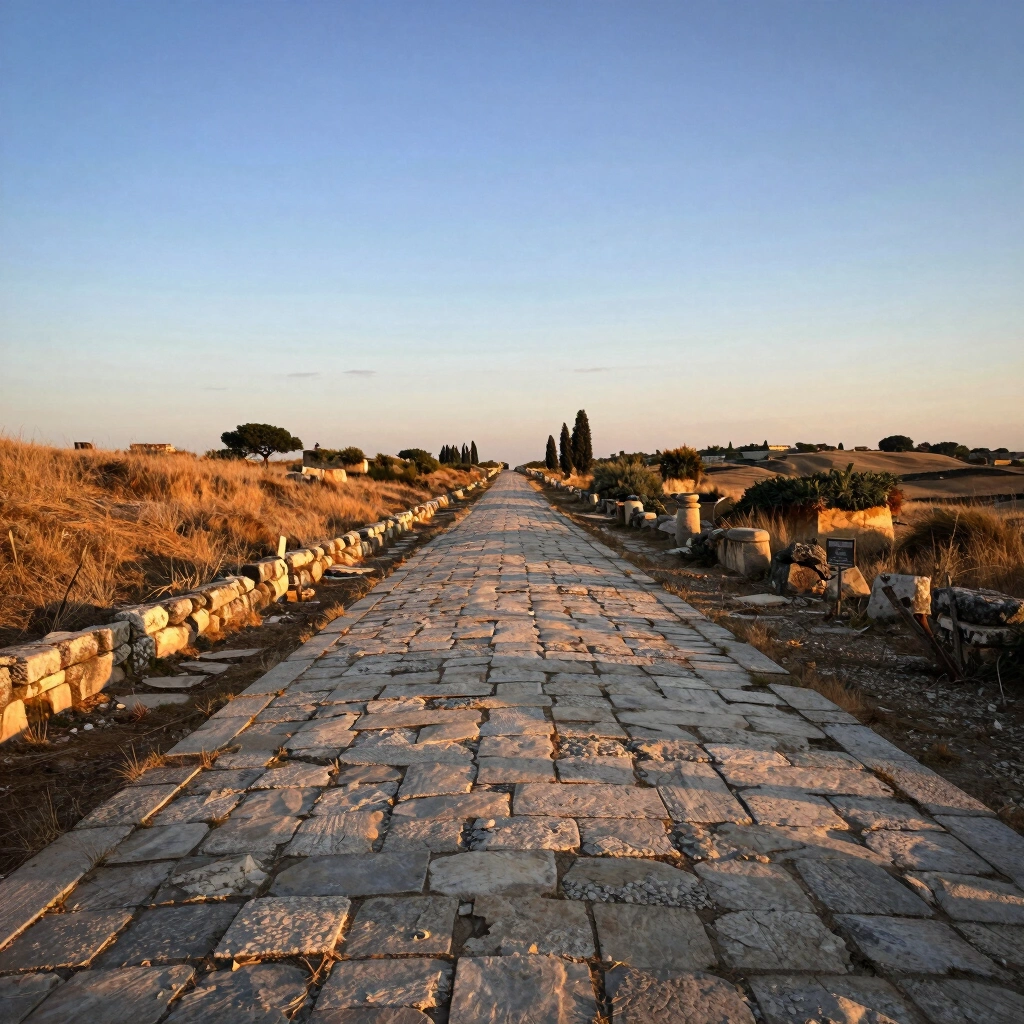
The timing matters. Paul wrote 2 Timothy around 66-67 AD, during Nero’s persecution of Christians. The Great Fire of Rome had occurred in 64 AD, and Nero blamed Christians for it. Tacitus records that Christians were arrested and executed in horrific public spectacles — covered in animal skins and torn apart by dogs, crucified, or burned alive as human torches in Nero’s gardens.
Paul was in the direct path of this. His first trial had gone partially well — he mentions being “delivered from the lion’s mouth” (4:17) — but his second trial would not end the same way. Church tradition holds that Paul was beheaded on the Ostian Way outside Rome, probably in 67 AD.
When Paul writes “God has not given us a spirit of fear,” he’s writing from inside the thing he’s telling Timothy not to fear. He’s not offering advice from safety. He’s modeling the verse from the worst possible position. The power, love, and self-discipline he describes are not hypothetical. They’re what he’s running on in a Roman prison, waiting to die.
What This Verse Does Not Say
It doesn’t say you won’t feel afraid. Paul doesn’t deny Timothy’s fear. He redirects it. The distinction is everything for anyone who reads this verse and thinks, “But I am afraid — does that mean I don’t have enough faith?” No. Timothy was afraid. Paul knew it. The verse doesn’t diagnose fear as a spiritual failure. It provides a stronger force to operate alongside the fear.
It doesn’t say power replaces vulnerability. Paul, in this very letter, asks Timothy to bring his cloak because he’s cold (4:13). He mentions being abandoned by almost everyone — “Only Luke is with me” (4:11). The man writing about power, love, and self-discipline is cold, lonely, and about to die. Power in the biblical sense does not mean invulnerability. It means capacity — the ability to act faithfully within fragile circumstances.
It doesn’t promise the removal of the threat. Nero’s persecution continued. Timothy’s challenges in Ephesus continued. Paul was executed. The verse promises equipment for the situation, not escape from it.
For more on how Paul’s theology of courage connects to the Old Testament foundations, bible verses about courage traces the theme from Moses through the apostles. And for the broader pattern of how Scripture addresses fear — the one emotion God speaks to more than any other — bible verses about fear covers the landscape. The verse that most directly parallels 2 Timothy 1:7 in the Old Testament is Isaiah 41:10 — same structure, same refusal to let fear have the final word, different millennium.
Strength for the Road Ahead

Be Strong and Courageous Farmhouse Wall Sign
Large farmhouse-style wooden sign with Joshua 1:9 verse, distressed finish for rustic home decor.
Check Price on AmazonAs an affiliate, we earn on qualifying purchases.

Bible Verse Wall Art Christian Inspirational Poster
Inspirational Bible verse wall art poster for home or office.
Check Price on AmazonAs an affiliate, we earn on qualifying purchases.

Cultivating the Fruit of the Spirit: Growing in Christlikeness
Devotional guide on growing in the nine fruit of the Spirit.
Check Price on AmazonAs an affiliate, we earn on qualifying purchases.
Frequently Asked Questions
What does 2 Timothy 1:7 mean?
Paul tells Timothy — his young protégé, leading the church in Ephesus during Nero’s persecution — that the Spirit God gives does not produce cowardice (deilia) but three specific capacities: dynamis (operative power, the capacity to act), agape (committed love, the motive to act rightly), and sophronismos (a sound mind, the clarity to think under pressure). Paul wrote from prison, awaiting execution. The verse is not a motivational slogan. It’s a dying mentor’s final equipment check for a frightened young leader.
Does 2 Timothy 1:7 mean Christians shouldn’t feel fear?
No. The verse does not address the emotion of fear. It addresses the spirit of fear — the posture of cowardice, shrinking back, abandoning your post. Timothy was evidently afraid; Paul knew it and didn’t rebuke the feeling. He redirected the response. Fear is a human reflex — Jesus himself experienced anguish in Gethsemane (Luke 22:44). What 2 Timothy 1:7 promises is that God provides power, love, and mental clarity that are stronger than the fear, not replacements for it.
What does “a sound mind” mean in 2 Timothy 1:7?
The Greek sophronismos — used only here in the New Testament — means a mind that is safe, whole, and functioning under control. It combines sōs (sound, safe) and phrēn (mind). For Timothy, who showed signs of stress-related health issues and the anxiety of overwhelming leadership responsibility, this was a specific promise: your mind will not collapse under the pressure. God’s Spirit provides the capacity for clear thought even in chaotic circumstances. The KJV’s “sound mind” captures the mental health dimension; the NIV’s “self-discipline” captures the behavioral dimension. Both are present in the Greek.
Who was Timothy in the Bible?
Timothy was Paul’s closest disciple and spiritual son, from Lystra in Asia Minor (modern Turkey). His mother Eunice was Jewish and his grandmother Lois was a believer; his father was Greek (Acts 16:1). Paul recruited him on his second missionary journey and they traveled together for over fifteen years. Timothy co-authored six of Paul’s letters. He led the church in Ephesus during one of the most dangerous periods in early Christianity — Nero’s persecution. Hebrews 13:23 mentions his imprisonment and release, suggesting he ultimately faced the persecution Paul warned him about.
Related Articles

Romans 8:28 Meaning: All Things Work Together for Good
Romans 8:28 is one of the most quoted and most misread verses in the Bible. Here's what Paul actually said, what the Greek word synergei reveals, the conditional clause people skip, and why the honest version is more useful than the greeting-card one.
1 Corinthians 13 Meaning: What Love Really Looks Like
1 Corinthians 13 is called the love chapter — but Paul wrote it to a church tearing itself apart. Here's what these famous words actually meant, verse by verse, and why the context makes them harder and better.
Isaiah 41:10 Meaning: What 'Fear Not, I Am With You' Actually Promises
Isaiah 41:10 is one of the most quoted verses in the Bible. Here's who God was speaking to, what the Hebrew reveals, and why four promises in one verse still hold.