
Bible Verses for Miscarriage and Pregnancy Loss
Bible verses for miscarriage and pregnancy loss — with the Hebrew behind them, the people who wrote them in unbearable grief, and what Scripture says about the child you lost.
Contents
Where do you even put this kind of grief?
There’s no casket. Often no service. The world moves on as if nothing happened, and you’re standing in a body that was supposed to be carrying someone — and isn’t anymore. If you’re reading bible verses for miscarriage right now, you don’t need a theology lecture. You need something that can sit with you in the silence of what just happened without pretending it’s smaller than it is.
These verses won’t fix this. Nothing will fix this today. But they were written by people who understood that some grief doesn’t have a name the rest of the world recognizes — and that God does not require the world’s recognition to be present in it.
Psalm 34:18 — “The Lord Is Close to the Brokenhearted”
“The Lord is close to the brokenhearted and saves those who are crushed in spirit.” — Psalm 34:18 (NIV)
David wrote this psalm after escaping from King Achish of Gath by pretending to be insane — drool running down his beard, scrabbling at the gate (1 Samuel 21:13). He wrote about God’s nearness from one of the most humiliating and desperate moments in his life. Not from a place of composure.
The Hebrew nishbar lev (brokenhearted) uses the word for structural collapse — a wall giving way, a vessel shattering. Not bruised. Broken. And qarov (close) means nearness, proximity. God is not observing your grief from a respectful distance. He is close. Pressed in. The verse doesn’t promise understanding. It promises presence.
If you need more Scripture for this specific kind of grief — the kind that sits in your body and won’t leave — bible verses for grief has more to hold onto. But this verse is where I’d start.
Psalm 139:13-16 — “You Were Known Before You Were Born”
“For you created my inmost being; you knit me together in my mother’s womb. I praise you because I am fearfully and wonderfully made; your works are wonderful, I know that full well. My frame was not hidden from you when I was made in the secret place, when I was woven together in the depths of the earth. Your eyes saw my unformed body; all the days ordained for me were written in your book before one of them came to be.” — Psalm 139:13-16 (NIV)
This is the verse that most readers searching for bible verses for miscarriage need and fear at the same time. Because it says two things simultaneously: your child was known and formed by God from the very beginning. And the days written in God’s book included the ones that feel unbearably short.
The Hebrew raqam (woven, embroidered) is the same word used for the skilled craftsmen who wove the tapestries of the tabernacle. God’s involvement in forming your child was not passive or general. It was specific, detailed, intentional — the same care given to the most sacred space in Israel.
And golem — translated “unformed body” — refers to the earliest embryonic stage. A wrapped, folded beginning. God’s eyes were on your baby at that stage. Before you knew. Before anyone knew. The child you lost was seen before they were visible.
David wrote this psalm as a meditation on God’s inescapable presence and knowledge. He opens with “You have searched me, Lord, and you know me” and closes with an invitation to be searched further. The entire psalm is about being fully known. Your child was fully known.
2 Corinthians 1:3-4 — “The God of All Comfort”
“Praise be to the God and Father of our Lord Jesus Christ, the Father of compassion and the God of all comfort, who comforts us in all our troubles, so that we can comfort those in any trouble with the comfort we ourselves receive from God.” — 2 Corinthians 1:3-4 (NIV)
Paul wrote this opening to a church that had watched him nearly die. Second Corinthians begins with Paul describing suffering so severe in Asia that “we despaired of life itself” (1:8). He doesn’t name the specific affliction. But he writes about comfort from inside the affliction, not after it.
The Greek paraklēsis (comfort) appears ten times in five verses here. The root parakaleō means to come alongside — the same root that gives us the title of the Holy Spirit in John’s Gospel: the Paraclete, the one called to stand beside. Comfort in the New Testament is not a feeling delivered from a distance. It is a person who shows up and stays.
This verse does not explain why your loss happened. It offers something different: the promise that the comfort you receive now will one day become something you can give to someone else walking this same road. That may be the last thing you want to hear today. But when you’re ready, Scripture about comfort holds more of this thread.

Psalm 56:8 — “You Keep Track of All My Sorrows”
“You keep track of all my sorrows. You have collected all my tears in your bottle. You have recorded each one in your book.” — Psalm 56:8 (NLT)
David wrote this while captured by the Philistines in Gath. The Hebrew nod carries a double meaning — it can mean a bottle (a wineskin for collecting) or it can mean wandering. Both meanings are present. God collects your tears as something precious, and God accompanies you in the wandering that grief brings.
The word sefer (book) is used elsewhere for official royal records. Your tears are not forgotten. They are documented in the same language Scripture uses for the acts of kings.
This verse matters for miscarriage and pregnancy loss because this grief is so often invisible to the outside world. Coworkers don’t know. Friends may not have been told. The loss can feel unwitnessed. Psalm 56:8 says it is witnessed. Every tear. Collected. Recorded. Counted.
Matthew 5:4 — “Blessed Are Those Who Mourn”
“Blessed are those who mourn, for they will be comforted.” — Matthew 5:4 (NIV)
Jesus said this in the Sermon on the Mount — to a crowd full of people who had lost things. The Greek makarios (blessed) doesn’t mean happy. It means favored, chosen, attended to by God. And penthountes (those who mourn) describes visible, embodied grief — the kind you can’t hide. Wailing. Tearing garments. The full-body expression of loss.
Jesus is not saying grief is good. He is saying that grieving people have God’s attention in a particular way. You are not forgotten. You are not invisible. The mourning itself is recognized by God as something that warrants His direct, personal comfort.
Romans 8:38-39 — “Nothing Can Separate”
“For I am convinced that neither death nor life, neither angels nor demons, neither the present nor the future, nor any powers, neither height nor depth, nor anything else in all creation, will be able to separate us from the love of God that is in Christ Jesus our Lord.” — Romans 8:38-39 (NIV)
Paul wrote this as the climax of Romans 8 — a chapter that begins with suffering and ends here. The Greek chōrizō (separate) means to sever completely, to cut off. Paul’s list is exhaustive on purpose. He searches every category of existence — death, life, present, future, cosmic powers, spatial dimensions — and declares that nothing in any of them can break the connection between you and God’s love.
Your child is not separated from that love. You are not separated from that love. The loss you are carrying exists inside a love that Paul says cannot be cut — by anything, in any dimension, under any circumstance.
Jeremiah 1:5 — “Before I Formed You”
“Before I formed you in the womb I knew you, before you were born I set you apart.” — Jeremiah 1:5 (NIV)
God said this to Jeremiah — a young man called to prophesy destruction to his own people. But the verse speaks to something larger than Jeremiah’s calling. The Hebrew yatsar (formed) is a potter’s word — hands shaping clay. And yada (knew) is the deepest Hebrew word for relational knowledge. It’s the same word used in Genesis 4:1 for the most intimate human knowing.
God knew your child with that kind of intimacy. Before the womb. Before the first heartbeat. Before the ultrasound you may or may not have had the chance to see. The knowing precedes the forming. And it does not end when the forming is interrupted.
When you’re ready — not today, maybe not this month — bible verses about hope holds what comes after the grief has done its necessary work. There is no rush.
Sometimes the most helpful thing in the days after a loss is something physical to hold — a devotional written for this specific grief, a memorial piece you can touch, something tangible when everything else feels like it’s dissolving.
For Remembering and Holding On
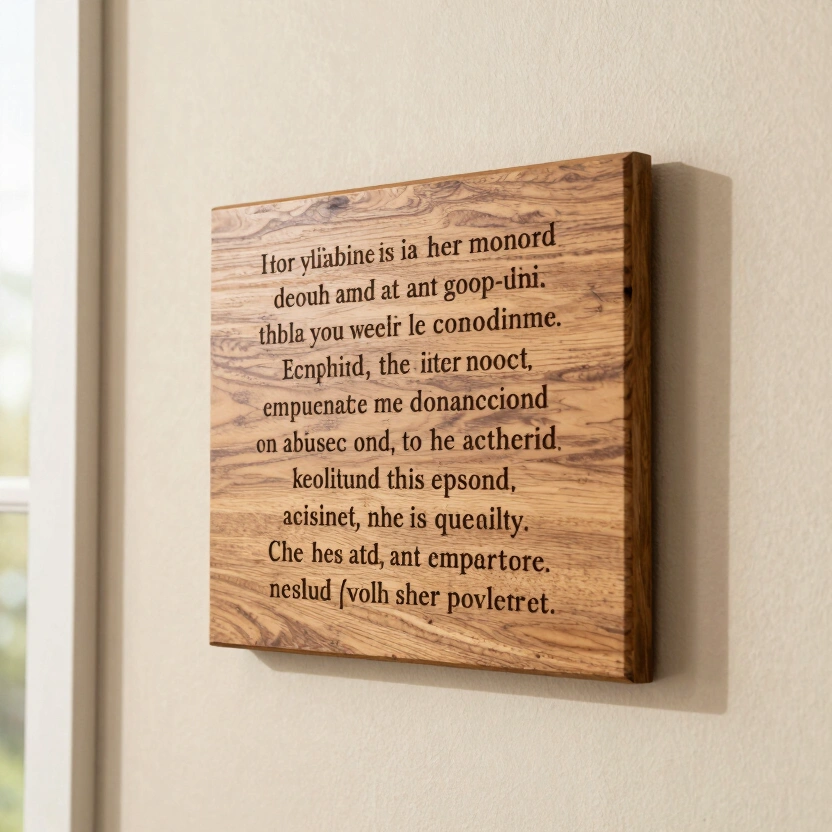
OAK Wood Identity in Christ Wall Art
Handcrafted oak wood wall art featuring Identity in Christ Scripture references.
Check Price on AmazonAs an affiliate, we earn on qualifying purchases.

3D Crystal Christian Gift with LED Light Base
3D crystal with Bible verse and LED base — a distinctive gift that catches the light.
Check Price on AmazonAs an affiliate, we earn on qualifying purchases.

XKDOUS Bible Verses Jar Kit — 270 Selected Verses
Jar with 270 hand-selected Bible verses for daily encouragement — ideal as a Christian graduation or friendship gift.
Check Price on AmazonAs an affiliate, we earn on qualifying purchases.

The bible verses for miscarriage gathered here were not written about pregnancy loss specifically. The Bible doesn’t have a chapter titled “When You Lose a Baby.” But it has David writing from a shattering he could barely name. It has Paul writing about comfort from inside suffering so bad he wanted to die. It has the psalmist telling God to count his tears — because no one else was counting them.
Your grief is real. It is witnessed. And the child you carried was known by God before you ever knew they were there.
If the words haven’t come yet — if you can’t pray, can’t read, can’t do anything but sit — that’s allowed. Sit. The verses will be here when you’re ready to reach for them.
Frequently Asked Questions
Does the Bible address miscarriage directly?
Not by name. The word “miscarriage” does not appear in most English translations. But Scripture is saturated with language for this experience — the loss of children (David’s infant son in 2 Samuel 12), the grief of barrenness and unfulfilled longing (Hannah in 1 Samuel 1), and the theology of God’s intimate knowledge of life from its earliest moments (Psalm 139, Jeremiah 1:5). The Bible covers the experience of pregnancy loss even though it doesn’t use the modern clinical term.
Will I see my baby in heaven?
Scripture doesn’t give a verse that answers this in a single line. But it gives strong threads. David, after the death of his infant son, said “I will go to him, but he will not return to me” (2 Samuel 12:23) — implying a reunion he anticipated. Psalm 139 describes God’s knowledge of unborn life as complete and personal. Jesus welcomed children with particular tenderness (Mark 10:14). While no theologian can give you absolute certainty, the weight of Scripture leans toward a God who does not abandon the smallest lives He formed.
Is it okay to be angry at God after a miscarriage?
Yes. The Psalms are full of anger directed at God — Psalm 13 opens with “How long, O Lord? Will you forget me forever?” Psalm 88 is the darkest psalm in the Bible, ending without resolution or hope. These are in the Bible. God included them. He was not threatened by the anger, and He does not withdraw from yours. The most honest prayers in Scripture are often the angriest ones. If rage is what you have right now, bring it. God can hold it.
How do I get through the days right after?
There is no prescribed path. Some people find that reading one short verse each morning gives the day a handhold — Psalm 34:18 or Matthew 5:4, just a line, not a chapter. Some people can’t read at all, and that’s fine. Let someone bring you food. Sleep when you can. Cry when it comes. Don’t let anyone tell you how long this should take. The grief after pregnancy loss has no timeline, and anyone who gives you one hasn’t been where you are.
Related Articles

Bible Verses for Grief: 15 Scriptures for the Loss You're Carrying
15 bible verses for grief with the history and original language — written by people who buried loved ones, watched kingdoms fall, and found God hadn't left the room.

Bible Verses About Comfort When You Need It Most
15 bible verses about comfort with the history and original language behind each one — written by people who needed comfort as badly as you do right now.

Bible Verses About Death That Speak to What We're All Afraid Of
8 bible verses about death — with the Hebrew and Greek behind them, the people who wrote them under unbearable loss, and what Scripture promises about what comes next.