
Bible Verses for Easter: The Resurrection Story
The most important Bible verses for Easter — organized by the Resurrection timeline from Old Testament prophecy through the empty tomb, with historical context and the original Greek behind the key moments.
Contents
Easter is the hinge of the entire Christian faith. Paul said it bluntly: “If Christ has not been raised, your faith is futile” (1 Corinthians 15:17). Everything before the Resurrection points toward it. Everything after it points back.
Most Easter verse lists give you a flat collection — twenty references with a sentence of encouragement each. This isn’t that. The verses below follow the Easter timeline, from Old Testament prophecy through betrayal, crucifixion, silence, and Resurrection, because they only carry their full weight in sequence. The burial verse reads differently when you know the tomb will be empty in three days. The prophecy reads differently when you know it was written seven hundred years before the event.
Whether you’re preparing for an Easter service, looking for something to read during Holy Week, or simply trying to understand what the Bible actually says happened — here’s the story, verse by verse.
Before It Happened — The Old Testament Prophecies
Isaiah 53:5 — “By His Wounds We Are Healed”
“But he was pierced for our transgressions, he was crushed for our iniquities; the punishment that brought us peace was on him, and by his wounds we are healed.”
Isaiah wrote this approximately 700 years before the crucifixion. He served as a prophet under four kings of Judah, beginning during the reign of Uzziah. The Servant Songs — the four poems in Isaiah that describe a suffering figure whose pain redeems others — have been debated by Jewish and Christian scholars for millennia. The early church read them as unmistakably fulfilled at Golgotha.
The Hebrew word for “pierced” — chalal — means to be fatally wounded, run through as a soldier is run through with a weapon. This is not metaphorical wounding. Charles Spurgeon preached on Isaiah 53:5 more than on any other Old Testament text. He called it “the gospel in miniature, written before the Gospel existed.”
Psalm 22:1 — “My God, My God, Why Have You Forsaken Me?”
Jesus quoted this exact line from the cross (Matthew 27:46) — the only Scripture he spoke aloud during the crucifixion. David wrote this Psalm around 1000 BC out of his own anguish of abandonment. That Jesus chose these specific words signals not coincidence but intentional prophetic fulfillment.
What most people don’t know: Psalm 22 doesn’t end in despair. It ends in vindication, worship, and a declaration that “future generations will be told about the Lord” (v. 30). Jesus chose a Psalm whose arc bends from abandonment to triumph. He was quoting the beginning of a story that already had an ending.
Psalm 16:10 — “You Will Not Abandon Me to the Realm of the Dead”
Peter quoted this verse in his Pentecost sermon (Acts 2:27) as direct proof of the Resurrection. His argument: David wrote it, but David died and is buried — his tomb is still here. He must have been speaking prophetically of someone else. This verse demonstrates how the earliest Christians read the Old Testament: backward from Easter, finding the Resurrection embedded in texts written a thousand years earlier.
The Final Week — Betrayal and the Cross
John 3:16 — “For God So Loved the World”
“For God so loved the world that he gave his one and only Son, that whoever believes in him shall not perish but have eternal life.”
This isn’t only an Easter verse — it’s the theological summary of why Easter happened. Jesus spoke these words to Nicodemus, a Pharisee who came at night — a religious insider seeking in secret, afraid of what his colleagues would think if they saw him. John’s Gospel, written by the disciple who stood at the foot of the cross, places this conversation as the doctrinal prelude to everything that followed.
The Greek word monogenes — translated “one and only” or “only begotten” — carries the weight of uniqueness and irreplaceability. This was not a sacrifice of something expendable. Billy Graham opened virtually every crusade with this verse — an estimated 2.2 billion people have heard it spoken through his ministry. Easter is the moment John 3:16 stops being theology and becomes an event in time.
For the full exploration of this verse, John 3:16: The Most Famous Verse Explained covers what the original Greek says and why it became the most recognized sentence in human history.
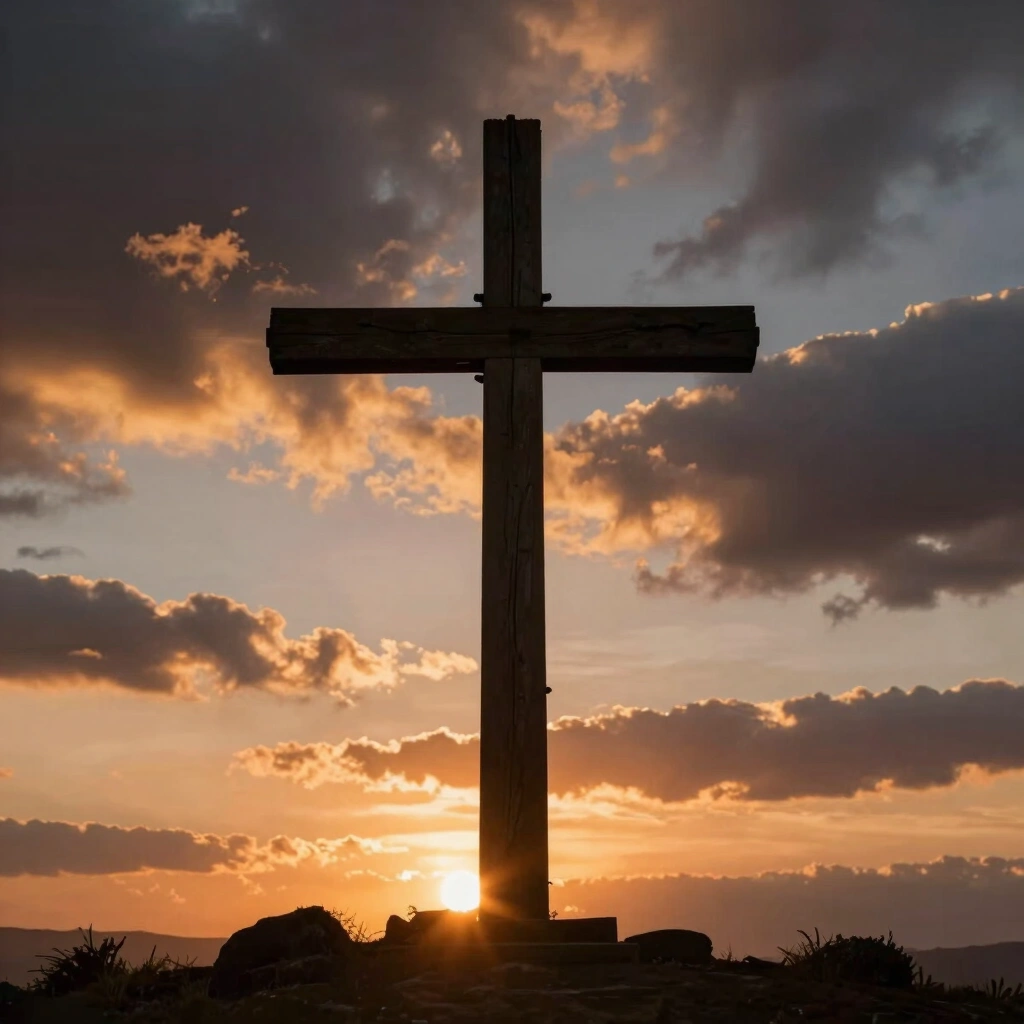
Luke 23:34 — “Father, Forgive Them”
“Father, forgive them, for they do not know what they are doing.”
The first of Jesus’ seven last words from the cross. Spoken while Roman soldiers drove nails. Luke — a physician and the most historically careful of the Gospel writers — recorded this detail. The verb aphes (forgive) is present imperative: not a one-time petition but a continuous plea. Keep forgiving them.
Roman crucifixion was designed for maximum humiliation. Victims were stripped, mounted at public crossroads, and left to die slowly over hours or days. The crowd included Roman soldiers, Jewish religious leaders, onlookers, and two thieves. Jesus’ words were addressed to all of them. The forgiveness was offered while the damage was still being inflicted — before anyone asked for it.
The Burial — The Silence of Holy Saturday
Matthew 27:59-60 — The Sealed Tomb
“Joseph took the body, wrapped it in a clean linen cloth, and placed it in his own new tomb that he had cut out of the rock. He rolled a big stone in front of the entrance to the tomb and went away.”
This is not a verse people quote on Easter cards. But it sets the scene that makes the Resurrection astonishing. Joseph of Arimathea was a wealthy member of the Sanhedrin — the very council that condemned Jesus — and he personally requested the body from Pilate and paid for a brand-new tomb. His action at the most dangerous moment in early Christian history is one of the quietly courageous acts the Gospels record without commentary.
The stone was rolled into place. The guards were posted. And then — the part we skip in our Easter services — three days of silence. The disciples didn’t know Sunday was coming. They spent Saturday in hiding, behind locked doors, convinced that everything they had followed for three years had ended in a Roman execution. Holy Saturday is the day of faith without evidence. Most of life is lived there.
Easter Scripture for Your Home

Be Strong and Courageous Farmhouse Wall Sign
Large farmhouse-style wooden sign with Joshua 1:9 verse, distressed finish for rustic home decor.
Check Price on AmazonAs an affiliate, we earn on qualifying purchases.
OAK Wood Identity in Christ Wall Art
Handcrafted oak wood wall art featuring Identity in Christ Scripture references.
Check Price on AmazonAs an affiliate, we earn on qualifying purchases.

XKDOUS Bible Verses Jar Kit — 270 Selected Verses
Jar with 270 hand-selected Bible verses for daily encouragement — ideal as a Christian graduation or friendship gift.
Check Price on AmazonAs an affiliate, we earn on qualifying purchases.
The Resurrection — The Verses That Changed Everything
Matthew 28:6 — “He Is Not Here; He Has Risen”
“He is not here; he has risen, just as he said. Come and see the place where he lay.”
The angel’s words to the women at the empty tomb. This is the sentence most read at Easter sunrise services worldwide. Matthew wrote for a Jewish audience who would have caught the phrase “just as he said” — a callback to Jesus’ three predictions of his own death and resurrection (Matthew 16:21, 17:23, 20:19). The Resurrection was not a surprise ending. It was the ending Jesus had announced in advance, and no one believed until they saw it.
The announcement was made to women. In first-century Jewish and Roman culture, women’s testimony was not admissible in court. The choice of women as first witnesses is historically counterintuitive — which many scholars consider evidence of genuine reportage rather than literary invention. If you were fabricating a resurrection story to convince a first-century audience, you would not start with witnesses no court would accept.
John 20:27-28 — Thomas’s Confession
“Then he said to Thomas, ‘Put your finger here; see my hands. Reach out your hand and put it into my side. Stop doubting and believe.’ Thomas said to him, ‘My Lord and my God!’”
Thomas has been unfairly labeled “Doubting Thomas” for two thousand years. His demand for evidence was reasonable by any standard. He wanted what the other disciples had already received — a personal encounter with the risen Jesus. His confession, when he saw the wounds, is the highest Christological statement in the Gospels: Kyrios mou kai ho Theos mou — “My Lord and my God.” Lord and God applied to a human person standing in front of him. Thomas didn’t just believe in the Resurrection. He identified the risen man as divine.
Thomas reportedly carried the Gospel to India, establishing the Malabar Christian community that exists to this day — the St. Thomas Christians. The man who doubted died for his certainty.
1 Corinthians 15:20 — “The Firstfruits of Those Who Have Fallen Asleep”
“But Christ has indeed been raised from the dead, the firstfruits of those who have fallen asleep.”
Paul’s resurrection argument. Written around 55 AD — within living memory of the crucifixion. Earlier in the chapter, Paul lists witnesses still alive: “more than five hundred of the brothers and sisters at the same time, most of whom are still living” (v. 6). This is an invitation to verify. Go ask them.
The Greek aparche — “firstfruits” — was an agricultural term from the Jewish harvest festival. The first portion of the crop was offered to God as a pledge that the rest would follow. Jesus’ resurrection is not an isolated miracle. It is the guarantee: what happened to him will happen to everyone who belongs to him. Spurgeon called this chapter “the Magna Carta of the Resurrection.”
After Easter — The Appearances That Sealed It
John 20:19-20 — Jesus appeared to the disciples behind locked doors. They were hiding “for fear of the Jewish leaders.” His first word: shalom — peace. Not “I told you so.” Not “Why did you run?” Peace. The scars were visible. This was a body that had died, not a replacement.
Luke 24:30-31 — Two disciples walked with Jesus on the road to Emmaus for hours without recognizing him. Recognition came at the table when he broke bread — the same gesture from the Last Supper. Their hearts had “burned within them” while he spoke (v. 32), but they didn’t understand until he performed the familiar act. Sometimes understanding follows encounter, not the other way around.
Acts 1:8 — “You will be my witnesses in Jerusalem, and in all Judea and Samaria, and to the ends of the earth.” The final commissioning. The Greek martyres — witnesses — is the root of “martyr.” The commission carried a cost its recipients eventually paid.
Carrying Easter Through the Year
Easter is not a Sunday. It’s a claim about the nature of reality — that death is not the final word, and that the God who raised Jesus will raise everything broken in his wake.
Romans 6:4 — “We were therefore buried with him through baptism into death in order that, just as Christ was raised from the dead through the glory of the Father, we too may live a new life.” Easter is not only about what happened to Jesus. Paul argues it is what happens to every person who enters the story.
Revelation 1:18 — “I am the Living One; I was dead, and now look, I am alive for ever and ever!” The risen Jesus speaking in John’s vision. The Greek zōn is present participle — not “I became alive” but “I am, continuously, the Living One.” The Resurrection is not a past event. It is an ongoing state.
For more on what Scripture says when you need to hold onto something, bible verses about hope gathers the passages that speak into seasons when hope feels fragile. And just as Easter has its own arc through Scripture, bible verses for Christmas traces the other side — the arrival that made the Resurrection possible.
Frequently Asked Questions
What Bible verse is most associated with Easter?
Matthew 28:6 — “He is not here; he has risen, just as he said” — is the most widely read at Easter sunrise services and the most direct Scriptural announcement of the Resurrection. John 3:16 is sometimes cited as the broader theological summary of why Easter happened.
Are there Easter verses in the Old Testament?
Yes. Isaiah 53:5, Psalm 22, and Psalm 16:10 all contain language the early church identified as prophetic of the crucifixion and resurrection. Peter quoted Psalm 16 directly in his Pentecost sermon (Acts 2:27) as proof that the Resurrection had been written into the Old Testament a thousand years before it occurred.
What Bible verse do you read on Good Friday?
Isaiah 53:5 (“by his wounds we are healed”) and Luke 23:34 (“Father, forgive them, for they do not know what they are doing”) are the two most commonly read on Good Friday. Many churches also read all seven of Jesus’ last words from the cross as a meditation through the day.
What Easter verses work well for cards or decorations?
Matthew 28:6 (“He has risen”), John 11:25 (“I am the resurrection and the life”), and 1 Corinthians 15:20 are the most commonly used for Easter cards, door signs, and seasonal home displays. They are short enough to read at a glance but carry the full weight of the Resurrection claim.
Related Articles

Matthew 11:28 Meaning: Come to Me, All Who Are Weary
Matthew 11:28 is one of the most personal invitations Jesus ever gave. Here's what the Greek reveals about 'weary' and 'rest,' what was happening when he said it, and why it speaks directly to modern burnout.

Bible Verses for Christmas: The True Story Behind the Holiday
15 bible verses for christmas — not just the familiar passages, but the prophecies, the backstories, and the details most people skip over in the nativity.