Bible Verses for Baby Dedication and Blessing
The best Bible verses for baby dedication — what each verse meant in its original context, which ones work for ceremonies, and how to choose the right verse for the child you're blessing.
Contents
A baby dedication is one of those moments that feels both ordinary and enormous at the same time. The child doesn’t know what’s happening. The parents are probably running on four hours of sleep. The congregation smiles. Someone reads a verse. And something real is occurring underneath the ceremony — a family standing before God and saying: this child belongs to you first, and we’re asking for help with what comes next.
Choosing the right verse matters more than most parents realize while they’re juggling the logistics. The verse read over your child at their dedication will show up in baby books, framed on nursery walls, and occasionally in memory when you’re lying awake wondering if you’re doing any of this right. It deserves more thought than grabbing the first result from a Google search.
1 Samuel 1:27-28 — The Original Dedication
“I prayed for this child, and the Lord has granted me what I asked of him. So now I give him to the Lord. For his whole life he will be given over to the Lord.” — 1 Samuel 1:27-28 (NIV)
Hannah’s prayer is the most direct parallel to baby dedication in the entire Bible. She had been barren for years — a devastating social stigma in ancient Israel, where a woman’s value was measured largely by her fertility. Her husband’s other wife, Peninnah, taunted her about it (1 Samuel 1:6). Year after year, Hannah went to the tabernacle at Shiloh and wept.
When Samuel was born, Hannah kept her vow. She nursed him until he was weaned — typically three years in ancient Israel — and then brought him to the tabernacle to serve under Eli the priest. She gave back the child she had agonized for. That’s dedication in its most literal form: not a ceremony but a release.
The Hebrew sha’al (asked/prayed for) and shaal (lent/given over) form a wordplay — the child who was asked for is now given back. Samuel’s name itself means “heard by God.”
For parents reading this who waited a long time for their child — through infertility, miscarriage, adoption, or years of uncertainty — Hannah’s prayer captures something no other verse does. The dedication is not just gratitude. It’s the costly act of holding loosely what you wanted desperately.
Psalm 127:3 — Children as Inheritance
“Children are a heritage from the Lord, offspring a reward from him.” — Psalm 127:3 (NIV)
Solomon wrote Psalm 127 — and the word “heritage” is stronger than modern English suggests. The Hebrew nachalah means an inheritance of land, a permanent possession entrusted by God. In ancient Israel, your nachalah was your family’s plot in the Promised Land — the thing you guarded, cultivated, and passed to your children. Calling a child a nachalah places them in that category: valuable, entrusted, meant to be tended and passed forward.
“Reward” — sakar — is the word for wages, payment for labor. Not a casual gift. Something earned, deserved, delivered. The verse places children in the category of divine compensation — God’s active, intentional giving.
For a dedication ceremony, this verse reframes the moment: you are not presenting your child to God as if they were yours first. You are acknowledging that the child was always God’s gift to you — a nachalah, an inheritance, something entrusted for a season with the expectation that it will be cultivated well.
Jeremiah 29:11 — Plans for the Child’s Future
"‘For I know the plans I have for you,’ declares the Lord, ‘plans to prosper you and not to harm you, plans to give you hope and a future.’" — Jeremiah 29:11 (NIV)
This is the most commonly selected verse for baby dedications — and it’s worth knowing what it actually says. Jeremiah wrote it to Jewish exiles in Babylon. They had lost their homeland, their temple, their freedom. God’s message through Jeremiah was not “I’ll rescue you immediately.” It was: “Build houses and settle down. Plant gardens. Marry. Have children” (29:5-6). The plans are real, but the timeline is seventy years. An entire generation would live and die in exile before the promise was fulfilled.
For a baby dedication, the verse carries both comfort and honest weight. God has plans for this child. Those plans are good. And those plans will unfold on a timeline that the parents cannot see or control. The verse is a promise of direction, not a promise of ease. Jeremiah 29:11’s full meaning covers the exile context in detail.
Proverbs 22:6 — The Parenting Mandate
“Start children off on the way they should go, and even when they are old they will not turn from it.” — Proverbs 22:6 (NIV)
The Hebrew chanakh — “start off” or “train up” — means to dedicate, to inaugurate, to set something on its intended path. The same root gives us Hanukkah — the festival of dedication. The word is about beginnings: laying a foundation, establishing a trajectory, setting the first stones in place.
“The way they should go” — al-pi darko — may be more nuanced than the traditional reading. Some scholars translate it “according to his way” — meaning according to the child’s own nature, gifts, and temperament. Solomon may be saying: don’t force every child into the same mold. Study them. A dedication, in this reading, is the beginning of a lifelong project of paying attention — learning who this particular child was made to be and nurturing that direction.
Numbers 6:24-26 — The Aaronic Blessing
“The Lord bless you and keep you; the Lord make his face shine on you and be gracious to you; the Lord turn his face toward you and give you peace.” — Numbers 6:24-26 (NIV)
This is the oldest blessing in continuous liturgical use in the world. God gave these exact words to Aaron — Moses’ brother, Israel’s first high priest — with the instruction: “This is how you are to bless the Israelites” (Numbers 6:23). Three thousand years later, these words are still spoken over newborns in churches, synagogues, and living rooms across the globe.
The structure is a three-line crescendo. Line one: blessing and protection. Line two: God’s favor and grace. Line three: God’s attention and shalom — complete peace, wholeness, flourishing.
In 1979, archaeologists discovered two tiny silver scrolls in a burial cave at Ketef Hinnom, outside Jerusalem. Dated to the seventh century BC — predating the Dead Sea Scrolls by four hundred years — the scrolls contained the text of Numbers 6:24-26. They are the oldest surviving texts of any biblical passage. The blessing has been spoken over children for nearly three millennia. Speaking it over yours connects you to a line that stretches back further than almost anything else in human worship.
Gifts for the Dedication

XKDOUS Bible Verses Jar Kit — 270 Selected Verses
Jar with 270 hand-selected Bible verses for daily encouragement — ideal as a Christian graduation or friendship gift.
Check Price on AmazonAs an affiliate, we earn on qualifying purchases.
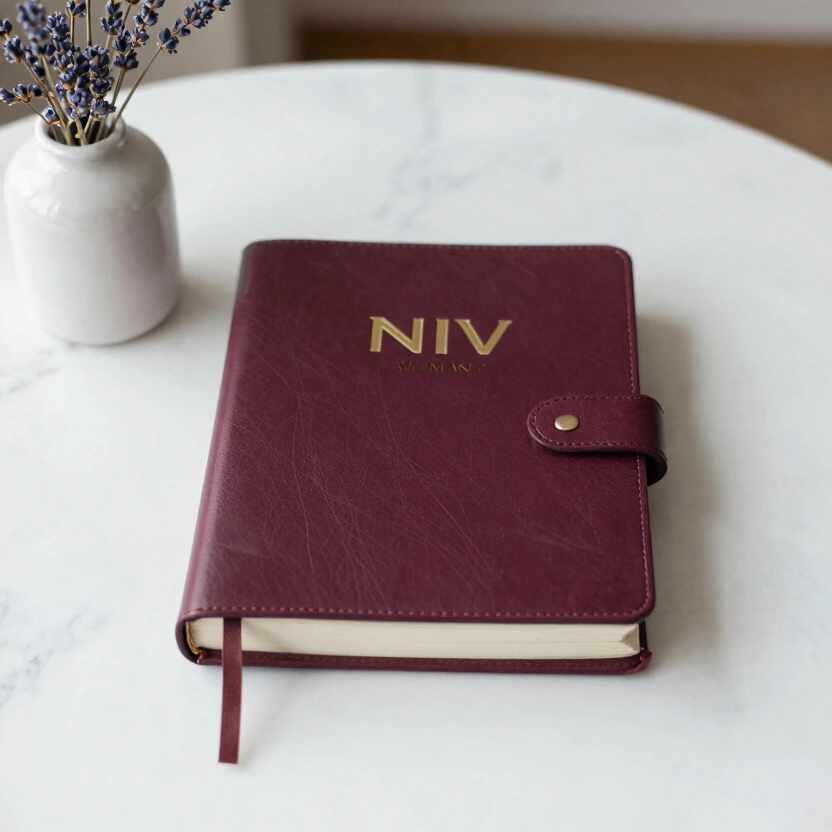
NIV The Woman's Study Bible
Study Bible designed for women with character profiles, topical articles, and devotional insights.
Check Price on AmazonAs an affiliate, we earn on qualifying purchases.
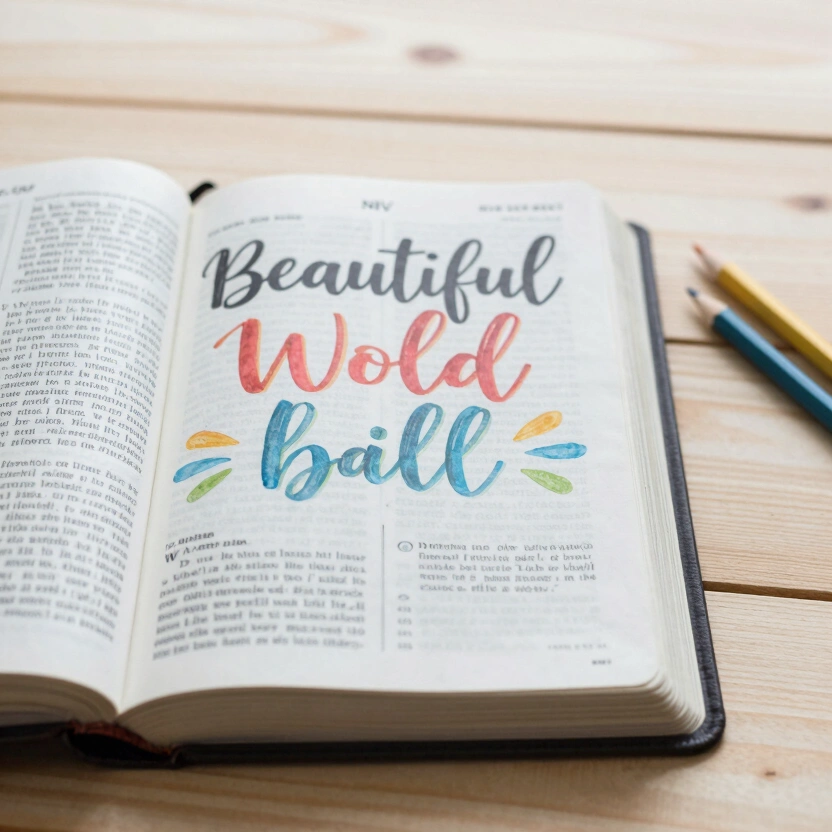
NIV Beautiful Word Bible
Full-color illustrated Bible with 500+ hand-lettered verses for creative journaling and reflection.
Check Price on AmazonAs an affiliate, we earn on qualifying purchases.
More Verses for Baby Dedications
Psalm 139:13-14 — “For you created my inmost being; you knit me together in my mother’s womb. I praise you because I am fearfully and wonderfully made.” David’s meditation on God’s intimate craftsmanship. The Hebrew raqam (knit together) means to embroider, to weave with intricate skill. The image: God as artisan, the womb as workshop. Perfect for a dedication — it locates God’s involvement before birth.
Mark 10:13-16 — “Let the little children come to me, and do not hinder them, for the kingdom of God belongs to such as them.” Jesus rebuking the disciples for turning children away. The word “hinder” — koluete — means to prevent, to block. The scene is physically tender: Jesus “took the children in his arms, placed his hands on them and blessed them” (v. 16). The most direct New Testament precedent for physically blessing a child.
Isaiah 54:13 — “All your children will be taught by the Lord, and great will be their peace.” A promise to Israel, applied by generations of parents to their own households. The Hebrew shalom here — not mere absence of conflict, but complete flourishing. A dedication prayer in verse form.
Deuteronomy 6:6-7 — “These commandments that I give you today are to be on your hearts. Impress them on your children.” Moses’ final instruction on parenting — teach your children in the normal rhythm of daily life: walking, eating, sleeping, rising. A dedication marks the beginning of that daily rhythm.
Psalm 100:5 — “For the Lord is good and his love endures forever; his faithfulness continues through all generations.” The generational promise. God’s faithfulness doesn’t start fresh with each child — it continues. Your child inherits a lineage of divine faithfulness that predates them.
Choosing the Right Verse for Your Child
A few practical thoughts. If your child came after a long wait — infertility, loss, adoption — 1 Samuel 1:27-28 speaks from that exact experience. If the dedication is in a church setting and you want something universally recognized, Numbers 6:24-26 has three thousand years of liturgical weight behind it. If you want to focus on the child’s unique identity, Psalm 139:13-14 locates God’s design in the womb itself.
Some parents choose a verse that speaks to their prayer for the child’s future — Jeremiah 29:11 or Proverbs 22:6. Others choose a verse that marks the moment — 1 Samuel 1:27-28 or Mark 10:13-16. Neither is wrong. The question is what you want the verse to carry: a prayer for what’s ahead, or a declaration about what’s already true.
For shorter verses that work well engraved on gifts or framed in a nursery, short bible verses has a curated collection. And for the baptism side — if your tradition practices infant baptism rather than dedication — bible verses for baptism covers the specific passages tied to that sacrament. Both occasions share the same impulse: bringing a child before God and asking him to hold what you can’t.
Frequently Asked Questions
What is the best Bible verse for a baby dedication?
1 Samuel 1:27-28 is the most directly relevant — Hannah’s dedication of Samuel is the biblical model the practice is based on. Numbers 6:24-26 (the Aaronic Blessing) is the most widely used in formal ceremonies because of its liturgical weight and three-thousand-year history. For a verse that emphasizes God’s design of the individual child, Psalm 139:13-14 speaks to the uniqueness and intentionality of creation.
What is the difference between baby dedication and baptism?
Baby dedication is a parent-initiated act of committing a child to God and publicly pledging to raise them in faith. It does not involve water and is not considered a sacrament. Infant baptism, practiced by Catholic, Orthodox, Anglican, Lutheran, Methodist, and Reformed traditions, is a sacramental act that applies water and is understood as God’s grace acting on the child. The biblical basis differs: dedication draws from 1 Samuel 1 (Hannah), while infant baptism draws from household baptisms in Acts (16:15, 16:33) and the covenant theology of circumcision in the Old Testament.
What do you say at a baby dedication?
Most baby dedications include three elements: a Scripture reading (1 Samuel 1:27-28, Numbers 6:24-26, or Psalm 127:3 are the most common), a prayer over the child, and a parental commitment — the parents publicly expressing their intention to raise the child in faith. Some churches add a congregational commitment, where the church community pledges to support the family. The tone should be warm and specific to the child, not formulaic.
Related Articles

Bible Verses About Self-Worth: How God Sees You
What God actually says about your worth — not the greeting-card version. Bible verses about self-worth with full context, the Hebrew and Greek behind them, and how to carry them into the days when you don't believe it.

Bible Verses About Trust When Everything Feels Uncertain
These bible verses about trust were written by people who had real reasons not to trust — exiles, prisoners, kings running for their lives. Here's the history and language behind each one.

Bible Verses About Fear and Why 'Fear Not' Appears 365 Times
The most important Bible verses about fear — with the Hebrew and Greek behind 'fear not,' the historical context most people miss, and why the Bible treats fear as something to walk through, not erase.