
Psalm 46:10 Meaning: Be Still and Know That I Am God
Psalm 46:10 doesn't mean what most people think. The Hebrew word for 'be still' is a military command — stop fighting. Here's the full context, the Assyrian siege behind it, and what it says to anxious minds today.
Contents
“Be still, and know that I am God; I will be exalted among the nations, I will be exalted in the earth.” — Psalm 46:10 (NIV)
If your mind hasn’t stopped running in weeks — if you lie awake replaying conversations, rehearsing worst-case scenarios, carrying a low hum of dread you can’t quite name — then you already know why this verse gets searched at 2 AM. “Be still” sounds like exactly what you need. The problem is, you have no idea how.
Here’s the thing most devotional readings miss: the Hebrew word behind “be still” is not an invitation to meditate. It’s a command to stop fighting. The context is war, not a quiet time chair. And paradoxically, that makes it more useful for anxiety — not less.
The Full Verse
Most translations render it differently, and the difference matters:
NIV: “Be still, and know that I am God.” ESV: “Be still, and know that I am God.” NASB: “Cease striving and know that I am God.” CSB: “Stop fighting and know that I am God.”
The NASB and CSB get closer to the Hebrew. “Be still” is not wrong, but it carries a softness the original doesn’t. The original is louder than that.
What “Be Still” Actually Means in Hebrew
The Hebrew word is raphah (רָפָה). It means to let drop, to let go, to sink down, to cease, to abandon. When it appears in military contexts — and it does — it means to drop your weapons. Stop the battle. Stand down.
In Judges 11:37, it means “let me alone.” In 2 Samuel 24:16, God commands a destroying angel to drop his hand — raphah. In Psalm 37:8, raphah is translated “refrain” — stop what you are doing. The word’s gravitational center is not gentle. It is authoritative. A commander telling soldiers: enough.
When God says raphah in Psalm 46:10, he is not whispering. He is shouting into chaos. Not “find a quiet room and center yourself.” More like: “Put down what you are fighting, because this battle is mine.”
For anyone with anxiety, the reframe is critical. “Be still” as a meditation instruction feels like one more thing to perform — and when your mind won’t cooperate, it becomes another failure. “Stop fighting what only I can handle” is different. It acknowledges that you have been fighting. It names the effort. And it says: that effort was never yours to carry.
“Know That I Am God” — What Follows the Command
The Hebrew word for “know” here is yada — and yada does not mean intellectual awareness. It means experiential, intimate, relational knowledge. The same word describes Adam “knowing” Eve (Genesis 4:1). It describes the kind of knowing that comes from being inside a relationship, not from observing it from outside.
“Know that I am God” is not a theology exam. It is a relational invitation. Stop the frantic motion and come back to who I am. Not to a concept of me. To me.
The verse ends with two declarations: “I will be exalted among the nations / I will be exalted in the earth.” God’s sovereignty is the reason the command works. You can stop fighting because the outcome is already declared. God will be exalted. The nations will know. The earth will know. Your effort to force this outcome is unnecessary. That’s the foundation underneath the stillness.
Who Wrote Psalm 46 and Why?
The superscription attributes it to the “Sons of Korah” — not a single person but a guild of Levitical musicians who served in the temple. They wrote several of the Psalms (42, 44-49, 84-85, 87-88), and their style tends toward vivid imagery and emotional intensity.
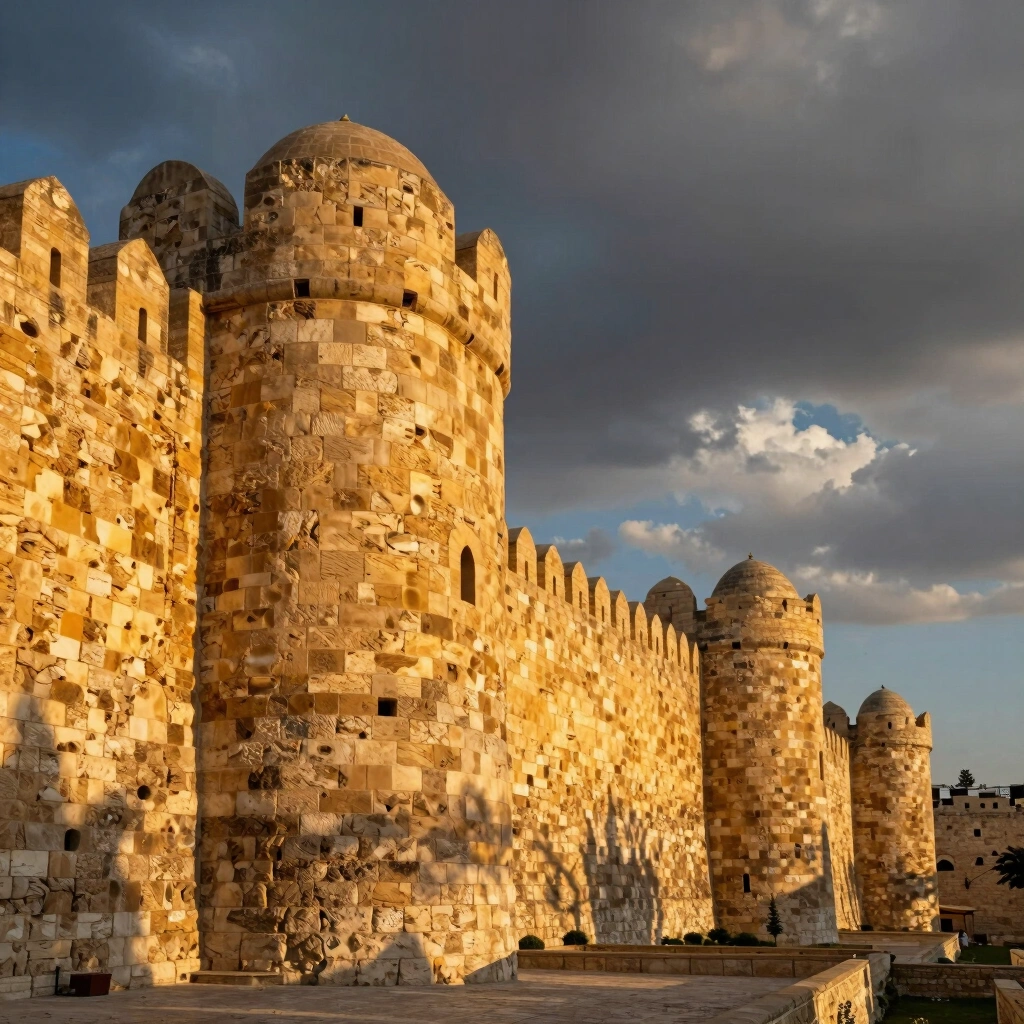
The historical setting most scholars point to: the Assyrian siege of Jerusalem in 701 BC. King Sennacherib of Assyria had already destroyed the northern kingdom of Israel and swept through Judah, taking forty-six fortified cities. His army surrounded Jerusalem. The population was trapped inside the walls, watching the most powerful military machine in the ancient world dig siege works around them.
Then — 2 Kings 19:35 — the angel of the Lord went out and struck down 185,000 Assyrian soldiers in a single night. The siege broke. The army withdrew. Sennacherib returned to Nineveh, where he was later assassinated by his own sons.
If Psalm 46 was written in response to this event — or during it — the imagery in the opening verses makes visceral sense. “Though the earth give way and the mountains fall into the heart of the sea, though its waters roar and foam and the mountains quake” (vv. 2-3). That’s not metaphor for a stressful week. That’s language for a siege that felt like the end of the world.
Martin Luther read Psalm 46 as the foundation for his own survival during the Reformation. In 1529, facing excommunication, death threats, and the collapse of everything he’d built, he composed “A Mighty Fortress Is Our God” — Ein feste Burg ist unser Gott — directly from Psalm 46. The hymn became the anthem of the Protestant Reformation. Luther didn’t borrow the sentiment. He lived inside the same circumstances: surrounded, outnumbered, and told by God to stop fighting and trust.
Reading Verse 10 Inside the Full Psalm
Psalm 46 moves in three beats:
Verses 1-3: Chaos. The earth shakes, mountains fall, waters rage. Everything stable becomes unstable. This is the world as it feels when the ground drops — diagnosis, divorce, collapse.
Verses 4-7: Refuge. A river of peace runs through the city of God. “God is within her, she will not fall; God will help her at break of day” (v. 5). Nations rage, kingdoms fall, God speaks and the earth melts. The refrain arrives: “The Lord Almighty is with us; the God of Jacob is our fortress.”
Verses 8-10: Resolution. “Come and see what the Lord has done, the desolations he has brought on the earth. He makes wars cease to the ends of the earth” (vv. 8-9). And then: “Be still, and know that I am God.”
Verse 10 is not a starting point. It’s a culmination. God has already demonstrated his power (verses 8-9), already declared himself a refuge (verses 1-7), and then commands stillness. The sequence matters: the evidence precedes the instruction. You are not being asked to be still in a vacuum. You are being asked to be still because God has already shown you who he is.
What Psalm 46:10 Means for Anxiety Today
The nature of the threat has changed since the Assyrian siege. The human response hasn’t. The anxious mind does the same thing a besieged city does — it fortifies, it scans for threats, it tries to control every variable, it refuses to rest because resting feels like surrendering to the danger.
Raphah speaks directly to that pattern.
Letting go of control. The anxious mind is often fighting battles it was never meant to fight — rehearsing conversations that haven’t happened, planning for catastrophes that may never arrive, holding the entire weight of an uncertain future as if God had subcontracted the job. Raphah says: drop your weapons. Not because the threat isn’t real, but because the battle isn’t yours.
Knowing versus believing. There is a gap between “I believe God exists” and the yada kind of knowing — the experiential certainty that comes from having watched God show up. Anxiety often lives in that gap. Psalm 46:10 doesn’t demand blind faith. It points backward: come and see what the Lord has done (v. 8). The evidence precedes the command.
Stillness as trust. In a culture that rewards productivity, stillness feels irresponsible. But in the logic of this Psalm, stillness is the most radical act of trust available — a refusal to keep white-knuckling what God has already claimed. It is not passive. It is the active decision to stop substituting your effort for God’s sovereignty.
If anxiety feels like the persistent background noise of your life, the bible verses for anxiety collection gathers the passages that address that specific weight — not once-a-year fear but the kind that sits on your chest and doesn’t leave.
Carry This Verse With You

3D Crystal Christian Gift with LED Light Base
3D crystal with Bible verse and LED base — a distinctive gift that catches the light.
Check Price on AmazonAs an affiliate, we earn on qualifying purchases.

NIV Journal the Word Bible
Wide-margin Bible with ruled lines for note-taking, journaling, and personal reflection.
Check Price on AmazonAs an affiliate, we earn on qualifying purchases.
John 14:6 I Am the Way the Truth and the Life Framed Wall Art
Framed John 14:6 scripture wall art poster.
Check Price on AmazonAs an affiliate, we earn on qualifying purchases.
Related Verses That Expand This Theme
Isaiah 40:31 — “Those who wait on the Lord will renew their strength.” Same invitation: stop striving, start waiting. The Hebrew qavah (wait) means to bind together, like twisting strands into a cord. Waiting on God is not passive. It’s being woven into his strength.
Philippians 4:6-7 — “Do not be anxious about anything… and the peace of God, which transcends all understanding, will guard your hearts and your minds.” The New Testament parallel. Paul promises peace that doesn’t depend on understanding — the same logic as raphah.
Matthew 11:28-30 — “Come to me, all who are weary and burdened, and I will give you rest.” Jesus echoes the Psalm 46 invitation in personal terms: rest is not earned; it is given.
For the broader landscape of what Scripture says about inner calm, bible verses about peace covers the theme from the Psalms through the Gospels into Paul’s letters. And if trust is the specific thing that feels hardest right now, bible verses about hope gathers the passages that speak into uncertainty.
How to Pray Psalm 46:10
One way I’ve found useful, especially on mornings when the anxiety is already running before my feet hit the floor: use the verse as a breath prayer. Inhale slowly: “Be still.” Exhale: “And know that I am God.” Repeat it five times. Not as a magic formula. As a physical act of doing what the verse says — ceasing, slowing, turning your attention from the threat to the one who is larger than it.
The ancient practice of lectio divina sits well with this verse: read it slowly, sit with a single phrase — maybe raphah today, maybe yada tomorrow — and let it do its work without forcing a response. The goal is not to manufacture calm. It’s to redirect attention. That’s all raphah asks.
Frequently Asked Questions
What does “be still” mean in Psalm 46:10?
The Hebrew raphah means to cease striving, let go, drop your weapons, stop fighting. It is not primarily about silence, meditation, or quiet time — it is a command to stop the frantic effort of trying to control what only God can control. The same word appears in military contexts meaning “stand down.” In Psalm 46, it follows nine verses of earthquake, war, and God demonstrating his power — the command to be still is grounded in what God has already done, not in wishful thinking.
Who wrote Psalm 46?
The superscription attributes it to the Sons of Korah, a guild of Levitical temple musicians responsible for several Psalms (42, 44-49, 84-85, 87-88). The historical setting most commonly proposed is the Assyrian siege of Jerusalem in 701 BC under King Hezekiah, when Sennacherib’s army surrounded the city and was supernaturally defeated overnight (2 Kings 19:35). Martin Luther later composed “A Mighty Fortress Is Our God” directly from this Psalm during the Reformation.
What is the meaning of “be still and know that I am God”?
God commands his people to stop their own striving — raphah — and instead fix their attention on his identity and sovereignty. “Know” (yada) is experiential, relational knowledge, not intellectual assent. The verse says: stop fighting, and come back to who I am. The declaration that follows (“I will be exalted among the nations”) provides the reason — God’s sovereignty is the foundation that makes stillness possible. You can stop because the outcome is already determined.
How can I apply Psalm 46:10 when I feel anxious?
Start by naming what you are fighting to control — the conversation you’re rehearsing, the outcome you’re trying to force, the scenario you keep running through. Raphah invites you to release it. Not to pretend it doesn’t matter, but to acknowledge that white-knuckling it isn’t working. Practically: pray the verse as a breath prayer (inhale “Be still,” exhale “and know that I am God”), or write it in a journal during a moment of anxiety as a way of physically enacting the release the verse describes.
Related Articles

Bible Verses About Peace: 16 Scriptures That Calm the Storm
These 16 bible verses about peace come with the history, original Hebrew and Greek, and real context — for the noise in your head and the chaos in your life.

Psalm 91 Meaning: What 'Under the Shadow of the Almighty' Promises
Psalm 91 is the Bible's strongest protection psalm — and the one Satan quoted to Jesus. Here's what it promises, what it doesn't, and why the original context matters more than the bumper sticker.

Bible Verses for Anxiety: 17 Scriptures That Meet You in the Storm
These 17 bible verses for anxiety come with the history, original language, and context — written by people who understood the weight you're carrying.