
Bible Verses About Worry: 14 Scriptures for Trusting God's Plan
These 14 bible verses about worry come with the history and original language — written by people who had far more reason to worry than most of us do.
Contents
Worry is different from anxiety. Not in the popular sense — people use the words interchangeably — but in the way the Bible treats them. Anxiety is the spike: chest tight, thoughts racing, system flooded. Worry is the hum. The low-grade, constant noise that follows you from morning to midnight, reshuffling the same fears in a slightly different order. Will there be enough money? Will the test results come back wrong? Will the person you love be okay?
If the spike brought you here, Bible verses for anxiety addresses that register. This article is for the hum — the daily, grinding, inexhaustible loop that Jesus addressed directly when he sat on a hillside and said, “Do not worry about your life.”
What Jesus Said About Worry — Matthew 6:25-34
Jesus’ longest sustained teaching on worry appears in the Sermon on the Mount. He wasn’t speaking abstractly. His audience was first-century Palestinian Jews under Roman occupation — people with legitimate material fears about food, shelter, debt, and survival.
Matthew 6:25-26
“Therefore I tell you, do not worry about your life, what you will eat or drink; or about your body, what you will wear. Is not life more than food, and the body more than clothes? Look at the birds of the air; they do not sow or reap or store away in barns, and yet your heavenly Father feeds them. Are you not much more valuable than they?”
The word “worry” — merimnao — means to be divided in mind. From merizō, to split. Jesus identifies worry’s mechanism: it fractures your attention between the present and a feared future. You live in two timelines simultaneously, and neither gets your full presence.
The bird illustration isn’t naivety. Jesus knew birds work — they forage, build nests, migrate enormous distances. They aren’t lazy. But they don’t agonize about tomorrow’s food while eating today’s. That’s his point. The worry adds nothing. The work is sufficient.
Matthew 6:27
“Can any one of you by worrying add a single hour to your life?”
A rhetorical question with a medical answer. Worry doesn’t extend life. Chronic stress — the physiological reality behind habitual worry — shortens it. Jesus’ observation was anecdotal in the first century. It’s measurable now. He was right.
Matthew 6:34
“Therefore do not worry about tomorrow, for tomorrow will worry about itself. Each day has enough trouble of its own.”
The most practical verse Jesus ever spoke about worry. He doesn’t say tomorrow’s problems won’t arrive. He says they belong to tomorrow. Borrowing tomorrow’s trouble into today doubles the load without halving the future. It’s cognitive arithmetic: worry adds but never subtracts.
The Psalms — Worry in Real Time
Psalm 55:22
“Cast your cares on the Lord and he will sustain you; he will never let the righteous be shaken.”
David, hunted — possibly by Absalom, his own son. The Hebrew word for “cast” — shalak — means to throw. Forcefully, deliberately. Not gently place. Not carefully set down. Throw. David describes worry as something heavy enough to require force to release. And “sustain” — kul — means to bear up, to contain, to hold the weight. God doesn’t catch the worry and hand it back. He absorbs it.
Psalm 94:19
“When anxiety was great within me, your consolation brought me joy.”
The Hebrew uses a plural — sar’appim — a swarm of anxious thoughts. Not one worry. Many, simultaneously, competing for attention. The psalmist was watching corruption thrive and justice fail. His worry had a moral dimension — things should be different, but they aren’t. And into that swarm, consolation. Not answers. Not justice delivered. Comfort that arrived while the injustice persisted.
Psalm 37:1-2
“Do not fret because of those who are evil or be envious of those who do wrong; for like the grass they will soon wither, like green plants they will soon die away.”
“Fret” — charah — literally means to burn. Worry that generates heat — the kind that keeps you up at night burning over someone else’s success or someone’s injustice going unpunished. David’s prescription: zoom out. The timeline corrects. Grass looks alive in April and is brown by August. Fret gives other people’s wrong behavior too much of your attention.
Recommended Resources
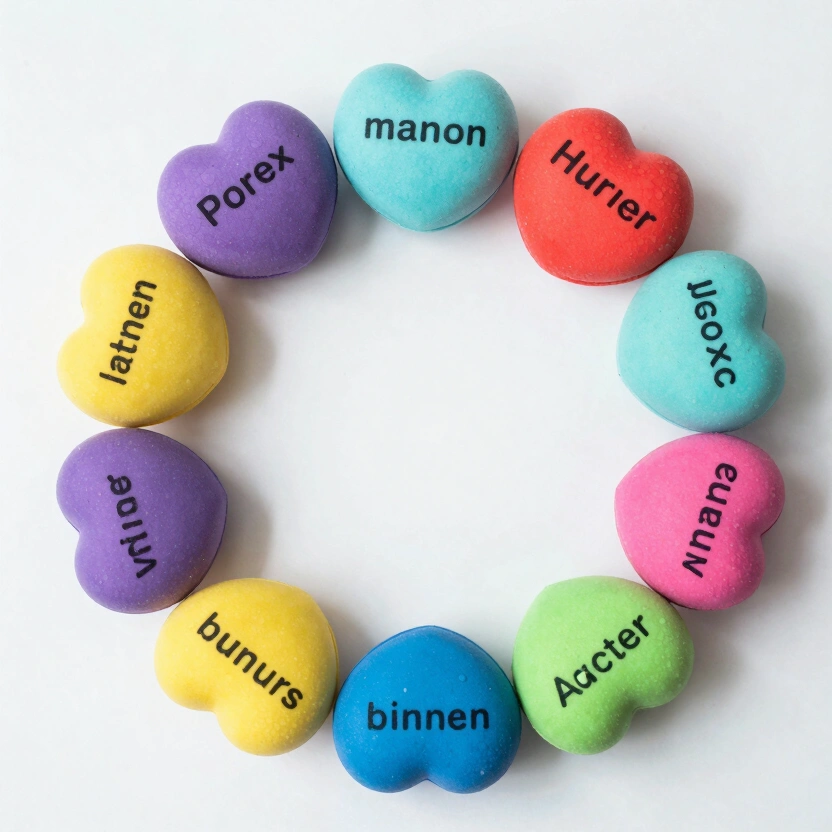
Meooeck Christian Stress Balls Bulk — 24 Pcs Heart-Shaped
Set of 24 heart-shaped stress balls with Bible verses — for church groups, gifts, or personal use.
Check Price on AmazonAs an affiliate, we earn on qualifying purchases.

OAK Wood Identity in Christ Wall Art
Handcrafted oak wood wall art featuring Identity in Christ Scripture references.
Check Price on AmazonAs an affiliate, we earn on qualifying purchases.

NIV Beautiful Word Bible
Full-color illustrated Bible with 500+ hand-lettered verses for creative journaling and reflection.
Check Price on AmazonAs an affiliate, we earn on qualifying purchases.

Casting Worry on God
1 Peter 5:6-7
“Humble yourselves, therefore, under God’s mighty hand, that he may lift you up in due time. Cast all your anxiety on him because he cares for you.”
Peter links humility to worry. The connection: worry is often a control issue. You worry because you believe the outcome depends entirely on you. Humility releases that assumption. The word “cast” — epirriptō — means to throw upon, to deposit deliberately. And “he cares for you” — melei — implies personal concern, not surveillance. God’s interest in your worry isn’t administrative. It’s relational.
Philippians 4:6-7
“Do not be anxious about anything, but in every situation, by prayer and petition, with thanksgiving, present your requests to God. And the peace of God, which transcends all understanding, will guard your hearts and your minds.”
Paul’s antidote to worry — three steps: pray (general conversation), petition (name the specific fear), and give thanks (find one thing). The peace that follows isn’t earned by the practice. It’s released by it. “Guard” — phroureo — is a military garrison posted at your mind’s gate. For a fuller treatment of this passage, the peace article breaks it down linguistically.
Proverbs 12:25
“Anxiety weighs down the heart, but a kind word cheers it up.”
Solomon naming the physics of worry: it has weight. The Hebrew de’agah describes heavy, preoccupying dread — a named, specific condition, not vague unease. And the cure here isn’t theology. It’s a kind word. Tov davar. Sometimes what breaks the worry cycle is one sentence from another human being. Solomon doesn’t spiritualize the solution. He keeps it human.
Trusting Instead of Worrying
Proverbs 3:5-6
“Trust in the Lord with all your heart and lean not on your own understanding; in all your ways submit to him, and he will make your paths straight.”
The Hebrew word for “trust” — batach — means to lean into something with your full body weight. Physical reliance, not intellectual agreement. “Lean not on your own understanding” is a command to stop being your own final authority. And “make your paths straight” — yashar — means to level, to grade, to smooth. Not “show you the right path.” Clear the path you’re already on.
Isaiah 41:10
“So do not fear, for I am with you; do not be dismayed, for I am your God. I will strengthen you and help you; I will uphold you with my righteous right hand.”
Four promises in sequence: presence, identity, strength, support. Spoken to people who had lost their nation, their temple, and their identity. The worry was civilizational. And God’s response wasn’t a plan. It was himself. “I am with you” answers every scenario worry can manufacture. Not “here’s what I’ll do.” “Here’s who I am.”
Jeremiah 29:11
"‘For I know the plans I have for you,’ declares the Lord, ‘plans to prosper you and not to harm you, plans to give you hope and a future.’"
The second most searched verse in the Bible. God spoke this to exiles who would wait seventy years for the promise to materialize. The “plans” weren’t for immediate rescue. They were for a generation most hearers wouldn’t live to see. The Hebrew acharit — “future” — literally means “the end” or “the latter part.” This verse doesn’t answer what happens tomorrow. It guarantees that the trajectory is good, even when the present is not. For a verse-by-verse breakdown of Jeremiah 29:11, I’ve written a separate treatment.
Worry tells you that thinking about the problem is the same as solving it. It’s not. Every verse above was written by someone who had real reasons to worry — war, exile, poverty, betrayal — and chose to direct their attention somewhere else. Not because the problems disappeared. Because the worry wasn’t helping, and they knew someone who could hold what they couldn’t carry.
If what you’re feeling is sharper than worry — if it’s crossed into the territory where your body is involved, chest tight, sleep gone — Bible verses for anxiety addresses that register. And if the worry has settled into something heavier and more persistent, Bible verses about depression meets you there.

Related Articles
- Bible Verses About Trust When Everything Feels Uncertain
- Matthew 6:33 Meaning: Seek First the Kingdom of God
Frequently Asked Questions
What is the best Bible verse for worry?
Matthew 6:34 — “Do not worry about tomorrow, for tomorrow will worry about itself” — is the most practical. 1 Peter 5:7 — “Cast all your anxiety on him because he cares for you” — is the most direct instruction. Proverbs 3:5-6 — “Trust in the Lord with all your heart” — addresses the root cause. The right verse depends on whether you need permission to stop worrying, a practice for releasing it, or a redirection of trust.
What’s the difference between worry and anxiety in the Bible?
In the New Testament, the same Greek word — merimna (divided mind) — covers both. In the Old Testament, Hebrew has de’agah (heavy dread) and charah (burning agitation). Modern distinction: anxiety is the acute spike, worry is the chronic hum. The Bible addresses both but with different tones — crisis-level commands (“do not be anxious about anything”) and daily wisdom (“do not fret because of evildoers”). The treatment is the same: redirect attention from the fear to the One who holds the outcome.
Is worrying a sin?
Jesus commands “do not worry” (Matthew 6:25), which is imperative — but the same Jesus also wept, grieved, and experienced anguish in Gethsemane. Worry becomes disobedience when it displaces trust as a lifestyle — when you choose to carry what you’ve been told to cast. But the experience of worry itself, the feeling, is human. God’s response to worried people in Scripture is consistently care, not condemnation.
Related Articles

Bible Verses for Anxiety: 17 Scriptures That Meet You in the Storm
These 17 bible verses for anxiety come with the history, original language, and context — written by people who understood the weight you're carrying.

Bible Verses About Peace: 16 Scriptures That Calm the Storm
These 16 bible verses about peace come with the history, original Hebrew and Greek, and real context — for the noise in your head and the chaos in your life.

Bible Verses for Baptism: 12 Scriptures for This Sacred Moment
12 bible verses for baptism with the history and original language — what the water meant to the early church, and what these passages actually say about going under.