
Bible Verses About Stress for When You Can't Slow Down
10 bible verses about stress — with the Hebrew and Greek behind them, the real people who prayed them under impossible weight, and what Scripture says when you can't slow down.
Contents
You’re reading this on your phone, aren’t you. In a gap you don’t really have — between meetings, or in bed when you should be sleeping, or in a parking lot before you walk into another thing that needs you. I don’t know what’s on your plate right now, but I know you didn’t come here for a lecture about trusting God more. You came because the weight is real and you need something solid to stand on.
These bible verses about stress were written by people carrying the same kind of impossible load — prophets who collapsed, apostles in chains, a king hiding in a cave. They didn’t write from comfort. They wrote from the middle of it. And what they said still holds.
What Stress Actually Is in Scripture
The Bible doesn’t use the word “stress.” But it describes the experience constantly. The Hebrew massa means burden, load, something lifted onto your shoulders. The Greek merimnaō — the word Jesus uses in Matthew 6 — means a divided mind, pulled in multiple directions at once. That’s stress. Not a modern invention. A human condition as old as the first person who had too much to carry and no one to hand it to.
There’s a difference between stress and anxiety. Stress is the weight of real responsibilities — deadlines, caregiving, financial pressure, decisions that won’t wait. Burnout happens when that weight accumulates without recovery. Anxiety is the mind spinning beyond those responsibilities into the uncontrollable. They overlap. But the bible verses about stress below speak specifically to the weight of what’s actually on your back right now.
When You’re Carrying Too Much
Matthew 11:28-30 — “Come to Me, All Who Are Weary”
“Come to me, all you who are weary and burdened, and I will give you rest. Take my yoke upon you and learn from me, for I am gentle and humble in heart, and you will find rest for your souls. For my yoke is easy and my burden is light.” — Matthew 11:28-30 (NIV)
Jesus said this to crowds of working people — laborers, fishermen, tax collectors — who were also carrying the weight of Pharisaic religious law. Hundreds of additional rules layered on top of the Torah. You couldn’t rest because there was always one more thing to get right. Sound familiar?
The Greek kopiaō (weary) means exhausted by labor — not tired from a bad night’s sleep but ground down by sustained effort. Phortizō (burdened) describes loading cargo onto a ship. Jesus is addressing people who are structurally overloaded. For a deeper look at this single verse, see our Matthew 11:28 study.
And then the solution: a yoke. Which sounds like more work. But a yoke in first-century Palestine was custom-fitted — a rabbi’s yoke was his teaching, his way of interpreting God’s law. Jesus says His version is chrēstos (easy, well-fitting) and elaphros (light). Not “no burden at all.” A burden that fits you.
Philippians 4:6-7 — Present Your Requests
“Do not be anxious about anything, but in every situation, by prayer and petition, with thanksgiving, present your requests to God. And the peace of God, which transcends all understanding, will guard your hearts and your minds in Christ Jesus.” — Philippians 4:6-7 (NIV)
Paul wrote this chained to a Roman guard, not knowing whether he’d live or die. Three Greek words for prayer appear in this single passage. Proseuchē — worship-oriented prayer. Deēsis — specific petition, a word soaked in need. Eucharistia — thanksgiving. Paul stacks all three: come in worship, name your specific burden, and bring gratitude before you have the answer.
The promise isn’t that stress disappears. It’s that the peace of God will phroureō your heart — stand guard like a military sentinel posted at the gates of your mind. Peace as active defense. Not a feeling you manufacture but a garrison that holds the line while the pressure continues.
1 Peter 5:7 — Cast All Your Anxiety on Him
“Cast all your anxiety on him because he cares for you.” — 1 Peter 5:7 (NIV)
Peter wrote this to scattered churches under persecution — Christians who had lost homes, livelihoods, and social standing for their faith. The Greek epirriptō (cast) is forceful — not gently placing but throwing, like jettisoning cargo in a storm. The Septuagint uses the same word in Psalm 55:22 for hurling your burden onto God.
And melei (he cares) implies personal interest. Not institutional concern. God’s attention directed specifically at you, in your specific situation, with your specific weight. Peter isn’t offering a technique. He’s pointing at a Person who offers real comfort.
When Stress Becomes Burnout
1 Kings 19:4-7 — Elijah Under the Broom Tree
“He came to a broom bush, sat down under it and prayed that he might die. ‘I have had enough, Lord,’ he said. ‘Take my life.’” — 1 Kings 19:4 (NIV)
This is the same Elijah who had just called down fire from heaven on Mount Carmel, publicly defeated 450 prophets of Baal, and outran a chariot in a rainstorm. The greatest prophetic victory in the Old Testament. And the very next chapter opens with him running for his life from Jezebel, collapsing in the wilderness, and begging God to kill him.
That’s burnout. Not lack of faith. Not moral failure. The crash that follows sustained output without recovery. And God’s response wasn’t a sermon. It was bread and water and sleep. Twice. “Get up and eat” (v.7). God addressed the body before He addressed the soul. Rest came before revelation.
If your stress has crossed into something darker — where the getting up itself feels impossible — that’s not weakness. It’s what happened to the most dramatic prophet in the Old Testament. And God’s first response was a meal and a nap.
Psalm 46:10 — “Be Still and Know”
“Be still, and know that I am God.” — Psalm 46:10 (NIV)
This verse gets embroidered on pillows. But the Hebrew is rougher than the pillow suggests. Raphah doesn’t mean “sit quietly.” It means let go. Relax the grip. Go limp. The same word is used for releasing a bowstring or dropping a weapon. God is not whispering a suggestion. He’s issuing a command to a person whose hands are clenched around control they were never meant to hold.
Psalm 46 was written during or about a national crisis — possibly the Assyrian siege of Jerusalem. The world is literally shaking. “The earth gives way and mountains fall into the heart of the sea” (v.2). In that context, raphah is not about finding a quiet corner. It’s about releasing your death grip in the middle of chaos.
Verses for Impossible Responsibility
Isaiah 41:10 — “Do Not Fear, for I Am with You”
“So do not fear, for I am with you; do not be dismayed, for I am your God. I will strengthen you and help you; I will uphold you with my righteous right hand.” — Isaiah 41:10 (NIV)
Isaiah wrote this to Israelites facing exile — the imminent destruction of everything they knew. The Hebrew chazaq (strengthen) is an engineering word. It describes reinforcing a cracking wall, shoring up a structure that’s about to fail. God is not saying “you can handle it.” He’s saying “I will reinforce what’s breaking.”
If your stress comes from being the person everyone leans on — the caregiver, the parent, the leader, the one who holds it together — this verse speaks to that specific load. The right hand of God isn’t an abstraction. It’s structural support for the person whose structure is giving way.
Numbers 11:14 — When Moses Couldn’t Carry It Alone
“I cannot carry all these people by myself; the burden is too heavy for me.” — Numbers 11:14 (NIV)
Moses said this to God’s face. Leading a million-plus people through a desert with no infrastructure, no supply lines, and no end in sight. He was done. And God’s answer wasn’t “try harder.” It was delegation — seventy elders appointed to share the load (v.16-17). The solution to Moses’ stress was more people, not more willpower.
If you’ve reached the point of saying “I cannot carry this,” you’re not failing. You’re in the company of the man God chose to lead an entire nation. The answer may not be more prayer. It may be asking for help.

When Stress Steals Your Sleep
Psalm 55:22 — Hurl Your Burden
“Cast your cares on the Lord and he will sustain you; he will never let the righteous be shaken.” — Psalm 55:22 (NIV)
The Hebrew shalak (cast) means to hurl — like jettisoning cargo overboard in a storm to keep the ship from sinking. And kul (sustain) means to absorb weight. The verse isn’t asking you to politely hand your stress to God. It’s telling you to throw it. Hard. Because He can absorb what you cannot.
Psalm 127:2 — He Gives to His Beloved in Sleep
“In vain you rise early and stay up late, toiling for food to eat — for he grants sleep to those he loves.” — Psalm 127:2 (NIV)
Solomon wrote this. A king who had access to everything and still recognized that striving past your limits is shav — emptiness, vapor. The Hebrew yediyd (beloved, his loved one) reframes the sleepless worker’s identity: you are not what you produce. You are loved before you accomplish anything today.
I keep this verse on my nightstand. Not as decoration. As a corrective. On the nights when my brain won’t stop running through tomorrow’s list, Psalm 127:2 reminds me that the universe doesn’t depend on my efficiency.
Some people find that having Scripture physically within reach — not on a screen — makes the difference between reading a verse and actually absorbing it. A desk jar you can pull from at random. A set of cards on the nightstand for the nights the thoughts won’t stop.
Scripture You Can Reach For
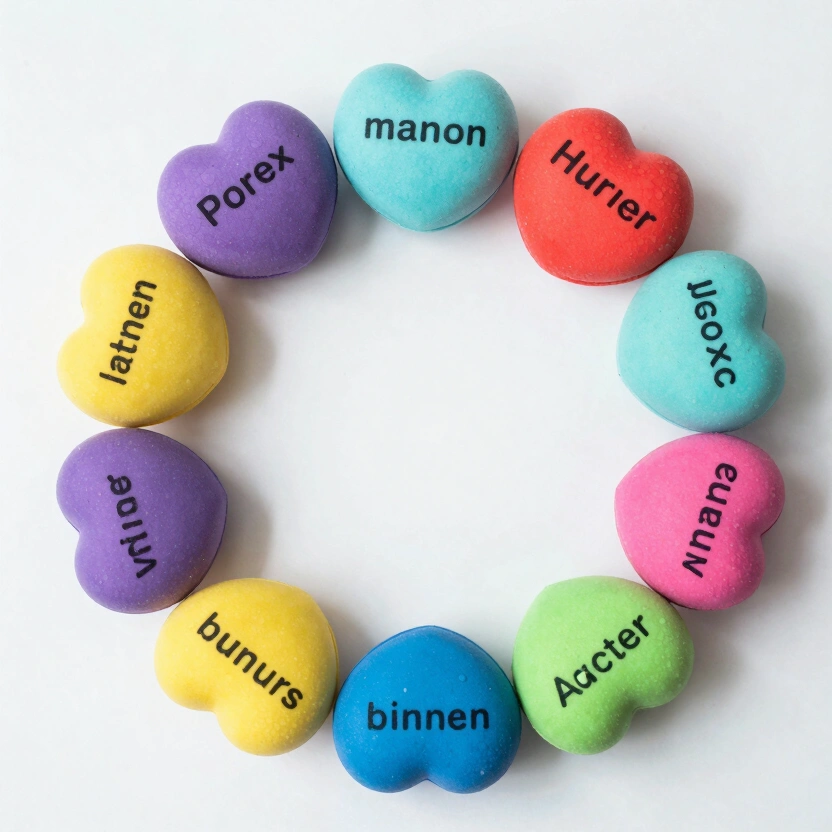
Meooeck Christian Stress Balls Bulk — 24 Pcs Heart-Shaped
Set of 24 heart-shaped stress balls with Bible verses — for church groups, gifts, or personal use.
Check Price on AmazonAs an affiliate, we earn on qualifying purchases.

XKDOUS Bible Verses Jar Kit — 270 Selected Verses
Jar with 270 hand-selected Bible verses for daily encouragement — ideal as a Christian graduation or friendship gift.
Check Price on AmazonAs an affiliate, we earn on qualifying purchases.
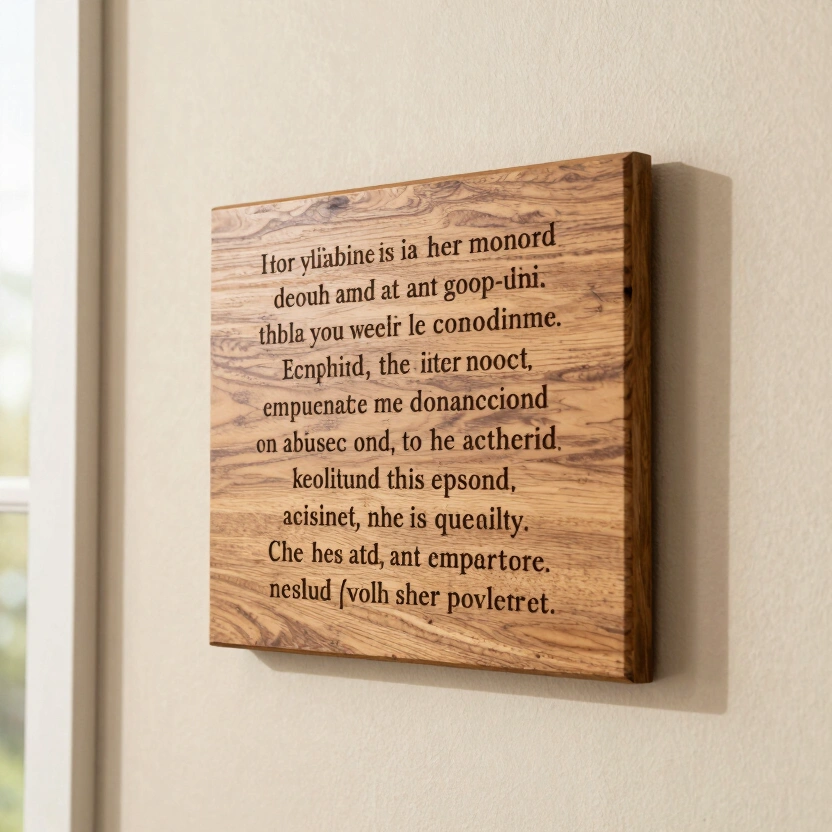
OAK Wood Identity in Christ Wall Art
Handcrafted oak wood wall art featuring Identity in Christ Scripture references.
Check Price on AmazonAs an affiliate, we earn on qualifying purchases.
Two More Verses Worth Carrying
Romans 8:28 — All Things Working Together
“And we know that in all things God works for the good of those who love him, who have been called according to his purpose.” — Romans 8:28 (NIV)
The Greek synergeo (works together) is where we get “synergy.” No single ingredient is good alone — the stress, the exhaustion, the confusion. Paul’s claim is that God is compositing all of it into something you can’t yet see. That doesn’t make the stress lighter today. It means today’s weight isn’t wasted.
Matthew 6:34 — Tomorrow’s Trouble
“Therefore do not worry about tomorrow, for tomorrow will worry about itself. Each day has enough trouble of its own.” — Matthew 6:34 (NIV)
Jesus said this during the Sermon on the Mount. It is the most practical one-sentence stress management advice in Scripture: you do not have to solve tomorrow today. The day you’re standing in is enough. That’s not denial. It’s scope.
The bible verses about stress in this article span a thousand years of human overload. Moses carrying a nation. Elijah collapsing after victory. David hurling his burden at God. Paul writing from a prison cell. None of them found a way to eliminate stress. Every one of them found a Person who could hold what they couldn’t.
If the weight hasn’t lifted after reading these, that’s okay. Some of these verses need time. They do their work in the background, on the mornings when you read them before the inbox opens and the demands start again. The peace the Bible talks about isn’t the absence of pressure. It’s the presence of something stronger than the pressure.
If your stress has a vocational dimension — deadlines, calling, work that demands more than you think you have to give — Bible verses about work and finding purpose addresses that intersection specifically.
And if the stress you’re carrying is amplified by guilt — not just the weight of what you have to do, but regret about what you’ve done — Bible verses about guilt separates the two and provides the specific framework for releasing the moral weight so the practical weight becomes manageable.
Frequently Asked Questions
What is the best Bible verse for stress?
It depends on what you need. If you need an invitation — a place to come and lay the weight down — Matthew 11:28 is the verse: “Come to me, all you who are weary and burdened, and I will give you rest.” If you need action — something to do with the stress right now — Psalm 55:22 tells you to shalak, to hurl your burden at God with force. Both are legitimate. One invites you in. The other tells you to throw.
Does the Bible say anything about burnout?
Elijah is the clearest example. After the greatest prophetic victory in the Old Testament, he collapsed in the desert and asked God to let him die (1 Kings 19:4). God’s response was not a rebuke. It was bread, water, and sleep. Twice. The Bible treats burnout as a human reality, not a spiritual failure. Philippians 4:6-7 adds the instruction to bring every burden to God in specific prayer — not as a formula, but as a practice that builds over time.
How do I actually use Bible verses to manage stress?
Three practical steps. First, identify one verse that speaks to your specific situation — not a generic favorite, but the one that addresses your actual weight. Second, write it on something physical — a card, a sticky note, a small canvas — and place it where you’ll see it before the stress arrives (not after). Third, try what Paul calls deēsis — specific petition. Name the burden out loud to God. Not “help me with stress.” Name the actual thing. The naming itself can begin to release the grip.
Is stress a sin according to the Bible?
No. Moses told God directly, “I cannot carry all these people by myself; the burden is too heavy for me” (Numbers 11:14). Jesus invited stressed and burdened people to come to Him — He didn’t rebuke them for being overwhelmed. Stress is the result of real weight in a finite body. The Bible treats it as a human reality that God meets with rest, reinforcement, and community — not condemnation.
Related Articles
Bible Verses About Fear and Why 'Fear Not' Appears 365 Times
The most important Bible verses about fear — with the Hebrew and Greek behind 'fear not,' the historical context most people miss, and why the Bible treats fear as something to walk through, not erase.

Psalm 46:10 Meaning: Be Still and Know That I Am God
Psalm 46:10 doesn't mean what most people think. The Hebrew word for 'be still' is a military command — stop fighting. Here's the full context, the Assyrian siege behind it, and what it says to anxious minds today.

Bible Verses About Peace: 16 Scriptures That Calm the Storm
These 16 bible verses about peace come with the history, original Hebrew and Greek, and real context — for the noise in your head and the chaos in your life.