
Matthew 11:28 Meaning: Come to Me, All Who Are Weary
Matthew 11:28 is one of the most personal invitations Jesus ever gave. Here's what the Greek reveals about 'weary' and 'rest,' what was happening when he said it, and why it speaks directly to modern burnout.
Contents
“Come to me, all who labor and are heavy laden, and I will give you rest.” — Matthew 11:28 (ESV)
If you’re reading this while running on empty — not from one bad day but from months of carrying something that doesn’t get lighter — then you already know what Jesus is talking about. You don’t need a definition of weariness. You’re living in one.
Matthew 11:28 is the only verse where Jesus doesn’t ask anything of you except to come. He doesn’t say “try harder,” “do more,” or “prove yourself first.” He says I will give you rest. The promise rests entirely on him. That alone makes this verse unusual in the Gospels. But the context — who Jesus was speaking to, and what was happening in his ministry at that exact moment — makes it far more specific and more personal than the way it usually appears on coffee mugs.
Who Was Jesus Talking To — and When?
Matthew 11 is not a triumphant chapter. It opens with John the Baptist in prison, sending messengers to Jesus with a question that reads like doubt: “Are you the one who is to come, or shall we look for another?” (v. 3). The prophet who had announced Jesus’ arrival — the one who baptized him in the Jordan — was locked in Herod’s dungeon and no longer sure.
Jesus responds to John’s messengers, then turns to the crowd and condemns the cities that witnessed his miracles and didn’t repent: Chorazin, Bethsaida, Capernaum. The language is blunt. “If the miracles that were performed in you had been performed in Sodom, it would have remained to this day” (v. 23). This is not gentle Jesus meek and mild. This is frustration from someone who has been rejected by the very communities he healed.
Then — immediately after the condemnation — Jesus prays: “I praise you, Father, Lord of heaven and earth, because you have hidden these things from the wise and learned, and revealed them to little children” (v. 25). And directly from that prayer, he turns and says: “Come to me, all who labor and are heavy laden.”
The sequence matters. The invitation follows rejection. It’s offered not to the religious elite who dismissed him, but to the “little children” — the small, the exhausted, the ones who don’t have the theological credentials to debate him. The people who are simply tired.
His audience: Galilean peasants under Roman occupation, carrying both the political weight of empire and the religious weight of 613 commandments as interpreted by Pharisees who added fence law upon fence law until the burden was unbearable. These weren’t people having a bad week. They were people trapped in a system designed to make them feel they could never be enough.
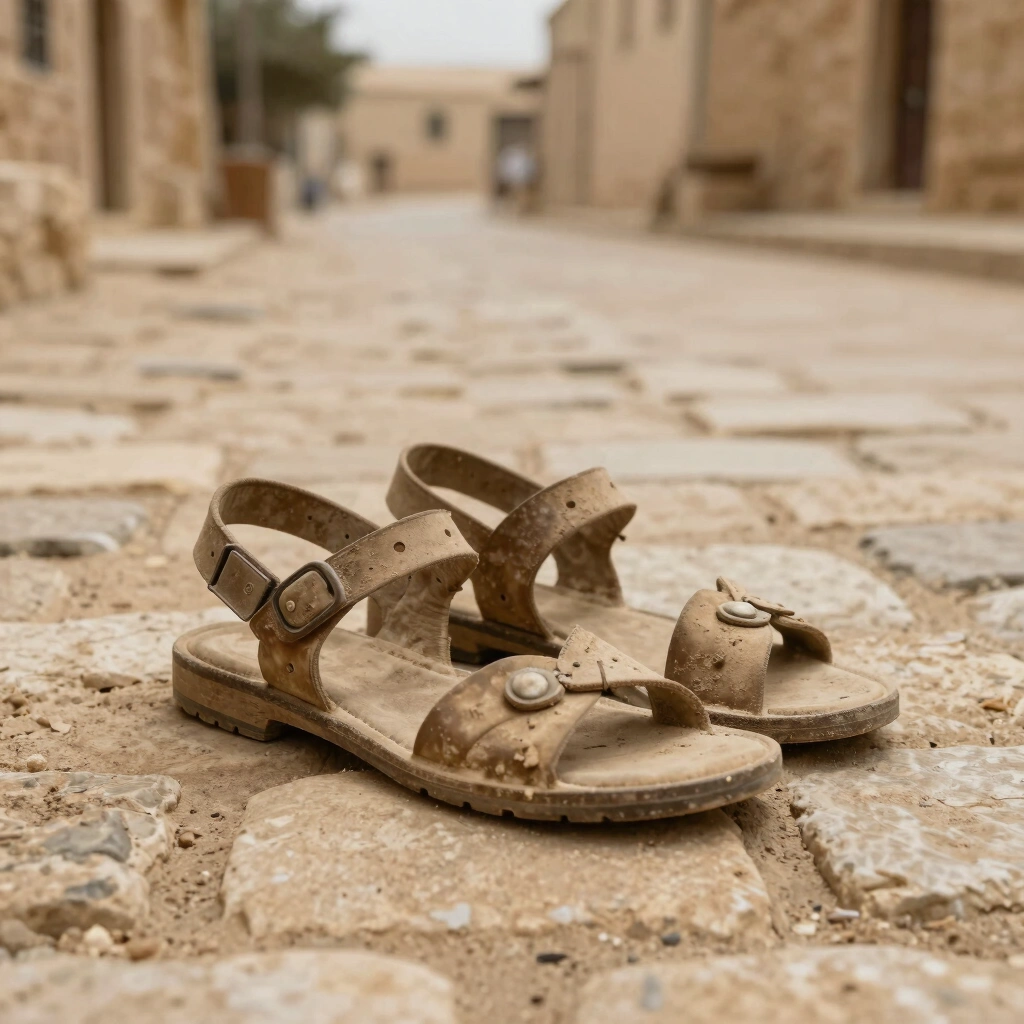
What the Greek Word for “Labor” Really Says
The ESV translates Matthew 11:28 as “all who labor and are heavy laden.” Two separate Greek words. Each describes a different kind of exhaustion.
“Labor” — kopiao (κοπιάω). This isn’t ordinary work. Kopiao means to toil to the point of weariness, to work until you’re beaten down by the effort. Paul uses the same word to describe his ministry — working with his hands until collapse (1 Corinthians 4:12), laboring to the point of exhaustion for the churches (Colossians 1:29). In classical Greek, kopiao carried the sense of being struck or beaten — the weariness that comes from taking blows, not just from exertion.
This is the Greek word for burnout. The person who has been running at full capacity for so long they no longer remember what full capacity felt like. The person who doesn’t need more motivation — they need permission to stop.
“Heavy laden” — phortizo (φορτίζω). To be loaded with a burden, like a pack animal staggering under weight it didn’t choose. The image is external — something placed on you, not something you generated. Jesus explicitly names the Pharisees as the ones who “tie up heavy burdens, hard to bear, and lay them on people’s shoulders, but they themselves are not willing to move them with their finger” (Matthew 23:4).
Two kinds of weariness. The one you create by striving. And the one someone else placed on your back. Jesus addresses both in a single sentence. He doesn’t distinguish. He doesn’t ask which kind you carry. The invitation is the same.
“I Will Give You Rest” — What Anapausis Means
The word “rest” — anapausis (ἀνάπαυσις) — is a compound: ana (again, up) + pauo (to stop, to cease). It’s not the rest of sleep. It’s the rest of cessation — the stopping of what has been grinding you down. A return. A restoration. The word implies that the rest already existed before the weariness began, and Jesus is offering to bring you back to it.
The Sabbath context matters here. The people hearing Jesus lived under a Sabbath system that had accumulated thirty-nine categories of forbidden work with hundreds of sub-rules. The day designed for rest had become its own burden — you could be penalized for picking grain on a Saturday. What God intended as anapausis had been turned into another form of phortizo. Jesus is offering rest that the religious system had made impossible.
But verses 29-30 add a layer that’s easy to miss: “Take my yoke upon you, and learn from me, for I am gentle and lowly in heart, and you will find rest for your souls. For my yoke is easy, and my burden is light.” Jesus doesn’t promise the absence of work. He promises a different yoke — a rabbinical metaphor for adopting a teacher’s way of interpreting the law. His interpretation is built on grace, not impossible perfection. The rest isn’t idleness. It’s the end of striving.
Charles Spurgeon preached on this distinction more than once. He noted that the rest of Matthew 11:28 is not the rest of heaven — that comes later. It is a rest available now, in the middle of the difficulty, while the yoke is still on your shoulders. The weight changes. The work doesn’t disappear. But the desperation does.
The bible verses about peace collection gathers the passages that run parallel to this — the peace that coexists with trouble rather than replacing it.
The Burden Jesus Is Talking About
“What is the burden Jesus refers to?” is one of the most searched questions about this verse. The answer has three layers, and all three apply to modern readers.
Religious perfectionism. For the original audience, this was concrete. The Pharisaic system was publicly enforced — failure was visible, costly, and socially devastating. You couldn’t maintain the rules and have a life. But you couldn’t ignore the rules and have a community. The system trapped people between guilt and exhaustion.
Self-imposed standards. The modern equivalent. The private internal law you write for yourself — that rest must be earned, that weakness is failure, that needing help means you’re broken. Nobody enforces this law from the outside. You enforce it on yourself, and it’s often stricter than anything the Pharisees required.
Circumstances you didn’t choose. Job loss. Chronic illness. Caregiving for a parent who doesn’t recognize you anymore. The death of someone who wasn’t supposed to die yet. Burdens that aren’t moral failings — just the weight of being human in a world that breaks things.
Jesus doesn’t specify a category. His invitation is unconditional across all three. All who labor. All who are heavy laden.
One thing to sit with: the verse doesn’t say Jesus will remove the burden immediately. It says he will give rest to you. The distinction matters. The circumstances may persist. But your interior state — the place where the grinding happens — that’s what he’s addressing. The promise is about who carries the weight with you, not about the weight disappearing.
If anxiety sits at the center of what you’re carrying, the bible verses for anxiety collection addresses that specific dimension — the kind of weariness that won’t let you sleep.
Resources for Weary Seasons

XKDOUS Bible Verses Jar Kit — 270 Selected Verses
Jar with 270 hand-selected Bible verses for daily encouragement — ideal as a Christian graduation or friendship gift.
Check Price on AmazonAs an affiliate, we earn on qualifying purchases.

Meooeck Christian Stress Balls Bulk — 24 Pcs Heart-Shaped
Set of 24 heart-shaped stress balls with Bible verses — for church groups, gifts, or personal use.
Check Price on AmazonAs an affiliate, we earn on qualifying purchases.

OAK Wood Identity in Christ Wall Art
Handcrafted oak wood wall art featuring Identity in Christ Scripture references.
Check Price on AmazonAs an affiliate, we earn on qualifying purchases.
Matthew 11:28 and Modern Burnout
Competitors stop at theological explanation. But the language Jesus uses maps directly onto what occupational psychologists now classify as burnout — the World Health Organization recognized it as a syndrome in 2019. Kopiao is emotional exhaustion pushed past sustainability. Phortizo is the external demand system that refuses to lighten. Two thousand years before clinical vocabulary existed, Jesus named both components in a single verse.
The verse doesn’t offer a productivity hack. It doesn’t say “come to me, reorganize your calendar, and I will give you efficiency.” The rest promised is not about doing less. It’s about ceasing to derive your worth from what you do.
I’ll be honest — there was a season where Matthew 11:28 felt more like a taunt than an invitation. I was deep in a caregiving stretch that had no end date, and “come to me, all who are weary” sounded like someone offering water from the other side of a locked door. What shifted wasn’t my circumstances. It was letting the verse be an invitation instead of a performance standard. I didn’t have to come well. I just had to come.
That’s the one practical suggestion I’d leave you with. Not a five-step plan. One thing: before the day loads its demands on you, sit with the verse. Not as a ritual. As a reminder that the invitation precedes the labor. It was spoken before you woke up exhausted. It’s still standing.
If comfort is what you’re searching for alongside rest, bible verses about comfort covers the broader landscape of what Scripture says about being held. And for the specific strain of weariness that looks more like hopelessness, bible verses about hope gathers the passages that speak into that.

Frequently Asked Questions
What does Matthew 11:28 mean?
Jesus extends an unconditional invitation to anyone carrying exhaustion — whether from striving (kopiao), from external burdens placed on them (phortizo), or from circumstances beyond their control. The “rest” he promises (anapausis) is not passive inactivity but active restoration — a return to wholeness. The verse sits inside a chapter of rejection and doubt (John the Baptist’s imprisonment, Jesus condemning unrepentant cities), and the invitation flows from a prayer of gratitude that God reveals truth to “little children.” It is not a command. It is an open door with no prerequisites.
What does “come to me all who are weary” mean?
“Weary” translates two Greek words: kopiao — those who labor beyond their capacity, worked to the point of collapse — and phortizo — those loaded down by external burdens they didn’t choose. Together they cover both self-generated exhaustion and system-imposed weight. “Come to me” is significant: unlike religious systems that demand you earn access, Jesus initiates. The movement required is minimal — a turning, not a performance. You don’t have to arrive rested to receive rest.
What is the burden Jesus refers to in Matthew 11:28?
Three layers: (1) the Pharisaic legal system that the original audience lived under — 613 commandments plus hundreds of interpretive additions that made compliance impossible; (2) the internal law of self-imposed perfectionism that modern readers maintain — the belief that rest must be earned and weakness is shameful; (3) the weight of circumstances no one chose — illness, grief, loss, caregiving. Jesus does not specify which burden qualifies. All three are included in the invitation.
What kind of rest does Jesus promise in Matthew 11:28?
The Greek anapausis means restoration — a return to a state of wholeness that existed before the weariness set in. It is not the rest of heaven (that’s a future promise) but a present-tense gift available now. Matthew 11:29-30 adds nuance: the rest comes not from doing nothing but from exchanging one yoke for another — trading the impossible standard of religious perfectionism for the “easy yoke” of grace. Spurgeon noted that this rest is not the absence of work but the absence of striving.
Related Articles
John 14:6 Meaning: I Am the Way, the Truth, and the Life
John 14:6 meaning — the Greek behind hodos, aletheia, and zoe, the Upper Room context, and why this is the only 'I Am' statement with three predicates.

Bible Verses About Peace: 16 Scriptures That Calm the Storm
These 16 bible verses about peace come with the history, original Hebrew and Greek, and real context — for the noise in your head and the chaos in your life.

Bible Verses About Humility and Why It's Not What You Think
Bible verses about humility — with Hebrew and Greek analysis showing that biblical humility is strength under control, not self-deprecation.