
Bible Verses About Trust When Everything Feels Uncertain
These bible verses about trust were written by people who had real reasons not to trust — exiles, prisoners, kings running for their lives. Here's the history and language behind each one.
Contents
The ground hasn’t collapsed. That’s the strange part. Nothing catastrophic has happened — or maybe it has, but it happened slowly enough that you can’t point to a single moment where everything shifted. What you’ve got instead is this low-grade uncertainty that won’t resolve. Decisions with no clear right answer. Relationships that aren’t broken but aren’t fine. A future you can’t see the shape of. And underneath all of it, the question that keeps surfacing: can I actually trust that this will work out?
Trust sounds simple as advice. It’s brutal as a practice — especially when what you’re being asked to trust involves outcomes you can’t see and timelines you don’t control. The bible verses about trust below were not written by people who had figured it out. They were written by a king hiding in enemy territory, a prophet watching his nation dissolve, a prisoner dictating letters in chains. They trusted in spite of what they could see. That distinction matters.
The Verse Everyone Comes Back To: Proverbs 3:5-6
“Trust in the Lord with all your heart and lean not on your own understanding; in all your ways submit to him, and he will make your paths straight.” — Proverbs 3:5-6 (NIV)
Solomon wrote this as instruction to his son — and Solomon’s story gives the verse its edge. He was the wisest man in the ancient world by reputation (1 Kings 4:29-31), and he still made catastrophic decisions. Seven hundred wives, three hundred concubines, temples built to foreign gods, a kingdom that split in two within a generation of his death. The father telling his son “lean not on your own understanding” was a man who had learned what happens when you do.
The Hebrew batach — the word behind “trust” — is physical. It doesn’t mean intellectual agreement. The image is throwing your full weight against something. A wall you lean your whole body into. Not a polite nod of assent. A collapse in the direction of God.
“Lean not on your own understanding” — binah — is the word for human reasoning, analysis, working-it-out-in-your-head ability. The prohibition isn’t against thinking. It’s against appointing your own analysis as the final authority. For the person who lies awake running scenarios and trying to calculate the right path — this verse names exactly what you’re doing and says: stop letting that be the thing you trust.
Yashar — “make your paths straight” — doesn’t mean God will show you a new road. It means he’ll grade the one you’re already on. Smooth it. Level it. The path gets more walkable. Not a different path. The same one, less rough.
Corrie ten Boom — survivor of Ravensbrück concentration camp, where her sister Betsie died in her arms — kept Proverbs 3:5-6 closer than any other verse. Her recorded reflection: she had no “understanding” to lean on that could explain what happened in that camp. Only this — trust that outlasts comprehension. She later said it was the most important verse she knew.
If worry is what’s pulling your trust apart right now, bible verses about worry addresses the specific mechanism of anxious thought and what Scripture says to do with it.
Psalm 56:3 — When You’re Afraid and Trust Anyway
“When I am afraid, I put my trust in you.” — Psalm 56:3 (NIV)
David wrote this while captured by the Philistines in Gath — the superscription says so explicitly. He’d fled King Saul’s death threats, crossed into enemy territory for safety, been recognized, and been seized. The man who would write the most celebrated songs of trust in Scripture was sitting in enemy hands when he wrote this one.
The grammar matters: “when I am afraid” is not “if.” It’s a conditional of time, not possibility. David assumes fear will come. He doesn’t perform bravery. He names the fear and makes a decision within it — not instead of it. Trust here is not the absence of fear. It’s a choice made in fear’s presence.
The rest of Psalm 56 contains one of the most intimate images in the Psalter: “You have collected all my tears in your bottle. You have recorded each one in your book” (v. 8, NLT). God keeping track of your grief, bottle by bottle. Trust in this psalm is not abstract. It’s grounded in the specific belief that God has been paying attention — even when it doesn’t feel like it.
For anyone in the uncertain middle — not catastrophe, just sustained low-level dread — this verse gives permission to be afraid and trust at the same time. Most people assume trust means the fear goes away. David says otherwise.
Isaiah 26:3 — The Promise Attached to Staying Fixed
“You will keep in perfect peace those whose minds are steadfast, because they trust in you.” — Isaiah 26:3 (NIV)
Isaiah wrote during one of the most politically volatile stretches of Israelite history. The Assyrian empire was swallowing nations whole — the northern kingdom of Israel had already disappeared. Chapter 26 sits inside what scholars call the “Isaiah Apocalypse” (chapters 24-27) — an extended meditation on God’s final triumph over chaos. The trust Isaiah describes is placed against the backdrop of civilizational upheaval, not personal comfort.
“Perfect peace” in Hebrew is shalom shalom — the word doubled for emphasis, the way Hebrew expresses the superlative. Not moderate peace. Not peace-when-things-settle-down. The full, undivided, complete version.
“Steadfast” — samak — means to lean heavily on, to brace against. The image is physical again: a mind braced against God as against a fixed point. And here’s the order that matters: the staying fixed produces the peace. The peace doesn’t produce the staying fixed. You don’t wait until you feel peaceful to trust. You trust, and the peace follows.
The practical implication for the person whose mind races at 3 AM: what your attention returns to when stress spikes determines what peace is available. Isaiah 26:3 is not a trick or a technique. It’s a description of how trust actually works — the direction of your mind determines the quality of your interior life.
A number of readers find it helps to have these verses physically present — somewhere visible at the start of the day, when trust is hardest to locate.
Carry These Words With You

NIV Journal the Word Bible
Wide-margin Bible with ruled lines for note-taking, journaling, and personal reflection.
Check Price on AmazonAs an affiliate, we earn on qualifying purchases.

3D Crystal Christian Gift with LED Light Base
3D crystal with Bible verse and LED base — a distinctive gift that catches the light.
Check Price on AmazonAs an affiliate, we earn on qualifying purchases.

XKDOUS Bible Verses Jar Kit — 270 Selected Verses
Jar with 270 hand-selected Bible verses for daily encouragement — ideal as a Christian graduation or friendship gift.
Check Price on AmazonAs an affiliate, we earn on qualifying purchases.
Psalm 62:8 — Trust as a Place You Go To
“Trust in him at all times, you people; pour out your hearts to him, for God is our refuge.” — Psalm 62:8 (NIV)
David again — likely during Absalom’s rebellion, when his own son drove him from Jerusalem and loyalists were defecting to the other side. “At all times” takes on weight when you know the man writing it was losing his kingdom to his own child.
“Pour out your hearts” — shaphak — is the same word used for pouring out water, blood, a drink offering. It’s evacuative. Not a tidy report to God. Not a composed prayer with the right words. The kind of praying where everything comes out at once — unedited, unorganized, raw.
Trust in Psalm 62 doesn’t require having it together before you approach God. The pouring out precedes the refuge, not the other way around. You bring the mess. The refuge receives it. For anyone who feels too tangled or too angry or too confused to pray “properly” — this verse says: that’s exactly the state you’re supposed to come in.
John 14:1 — “Let Not Your Heart Be Troubled”
“Do not let your hearts be troubled. You believe in God; believe also in me.” — John 14:1 (NIV)
Jesus spoke these words the night of his arrest. The upper room. The Last Supper just finished. He had washed their feet. He had told them one of them would betray him. And now he says: don’t let your hearts be troubled.
“Troubled” — Greek tarassō — means shaken, disturbed, thrown into confusion. The same word is used when Jesus himself was “deeply moved” at Lazarus’s tomb (John 11:33). This isn’t mild unease. It’s the deep disturbance of watching your world rearrange.
The grammar is imperative: “do not let.” Agency is implied — not passive calm, but an active refusal to be governed by the disturbance. And the basis Jesus offers is not an explanation of what’s coming. It’s not a plan. It’s himself: “believe also in me.” Trust directed at a person, not an outcome.
For how faith and trust interweave across Scripture, bible verses about faith traces both concepts in detail.
More Bible Verses About Trust Worth Sitting With
Nahum 1:7 — “The Lord is good, a refuge in times of trouble. He cares for those who trust in him.” Nahum is the least-read minor prophet — a book almost entirely composed of judgment against Nineveh. This single verse is the exception: care and goodness embedded inside a book of divine wrath. Refuge offered precisely where the landscape is harshest.
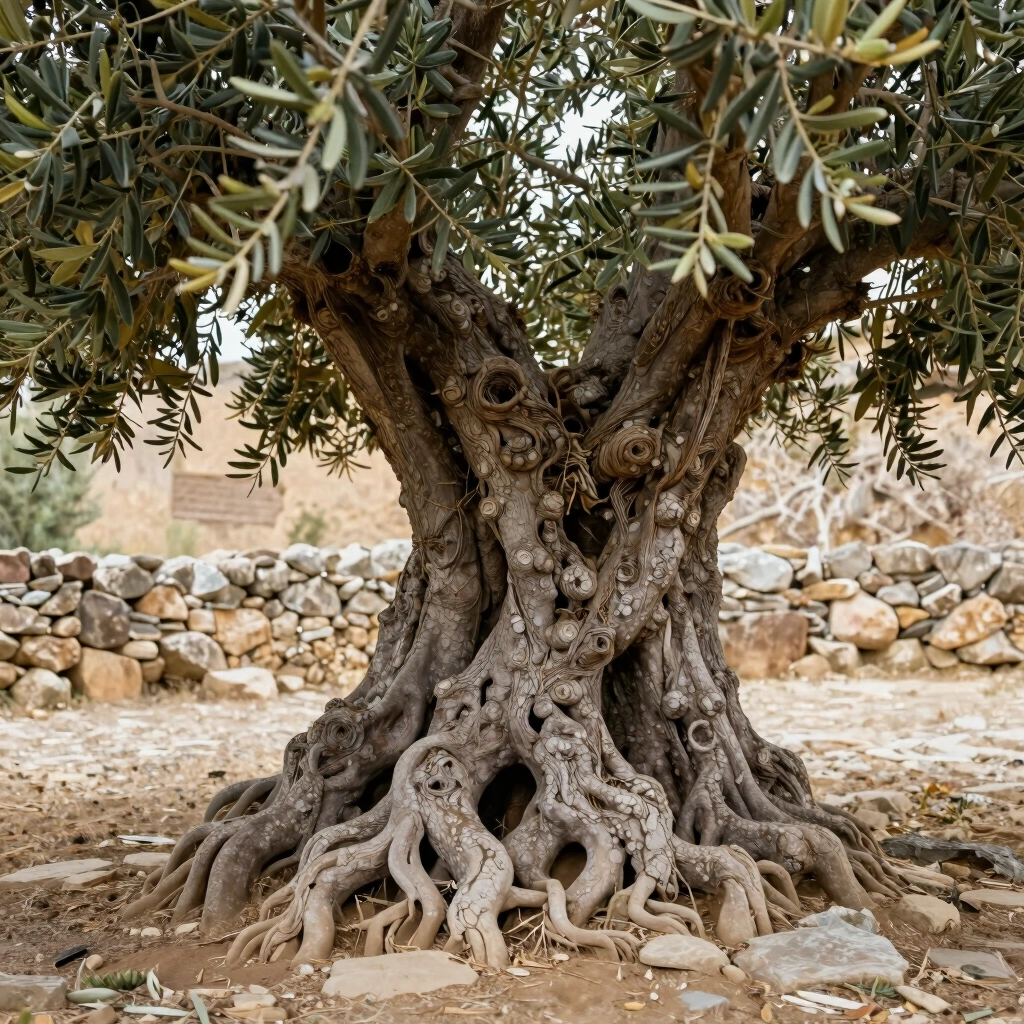
Jeremiah 17:7-8 — “But blessed is the one who trusts in the Lord, whose confidence is in him. They will be like a tree planted by the water.” Jeremiah 17 contrasts the cursed person who relies on human strength with the blessed person whose roots reach toward God. Jeremiah wrote this while watching his own nation collapse — trust described during national failure.
Psalm 91:2 — “I will say of the Lord, ‘He is my refuge and my fortress, my God, in whom I trust.’” A personal declaration, not a theological statement. The intimacy of the possessive — my refuge, my fortress, my God — matters. Scholars note this psalm was likely used liturgically for people heading into dangerous situations: soldiers, travelers, those entering uncertain territory.

Trust isn’t the same as certainty. The people who wrote these verses didn’t have certainty. They had the same uncertainty you’re carrying right now — exile, siege, arrest, rebellion, the slow erosion of things that once felt solid — and they made a decision within it. Not after it resolved. Within it.
If the uncertainty you’re carrying has its own specific shape — if it’s anxiety that won’t quiet — Psalm 46:10 speaks directly to the experience of being told to be still when your mind won’t stop moving. The Hebrew behind it changes everything.
Related Articles
- Proverbs 3:5-6 Meaning: Trust in the Lord With All Your Heart
- Bible Verses About Doubt When Your Faith Feels Thin
- Matthew 6:33 Meaning: Seek First the Kingdom of God
Frequently Asked Questions
What does the Bible say about trust?
The Bible treats trust — Hebrew batach, Greek pisteuo — as a physical posture, not a mental state. In Proverbs 3:5, it means leaning your full body weight onto something. In Psalm 56:3, it means making a decision within fear, not after the fear goes away. The consistent message across both testaments: trust is a choice you make in the presence of uncertainty, directed toward God as a refuge rather than toward your own ability to resolve the situation.
What is the best Bible verse about trusting God?
Proverbs 3:5-6 is the most referenced across Scripture and Christian tradition — “Trust in the Lord with all your heart and lean not on your own understanding” — because it addresses the root issue: the temptation to appoint your own reasoning as the final authority. Psalm 56:3 — “When I am afraid, I put my trust in you” — is the most honest, because David doesn’t pretend the fear is absent. The right verse depends on whether you need direction for how to trust or permission to trust while still afraid.
What is the difference between trust and faith in the Bible?
In English they’re distinct words. In Hebrew, emunah (faithfulness, firmness) and batach (trust, leaning) overlap significantly. In Greek, pistis covers both faith and trust — the conviction that something is true and the willingness to act on it. The Bible doesn’t draw a hard line between believing God exists and trusting him with your life. Proverbs 3:5 uses batach — the most physical, concrete form of trust — which is what the New Testament calls pistis in action. For how these concepts run together across Scripture, bible verses about faith traces both in detail.
Related Articles

Bible Verses About Humility and Why It's Not What You Think
Bible verses about humility — with Hebrew and Greek analysis showing that biblical humility is strength under control, not self-deprecation.

Bible Verses About Peace: 16 Scriptures That Calm the Storm
These 16 bible verses about peace come with the history, original Hebrew and Greek, and real context — for the noise in your head and the chaos in your life.

Bible Verses About Joy: 14 Scriptures That Go Beyond Happiness
14 bible verses about joy with the history and original language — the kind of joy that survives prison, poverty, and loss because it was never about circumstances.