Most Popular Bible Verses: Why These 15 Scriptures Became Famous
The 15 most popular bible verses of all time — not just listed, but explained: how they became famous, what they originally meant, and why they still matter.
Contents
Which Bible verse gets searched more than any other on the internet? If you guessed John 3:16, you’re right — but not by the margin you’d expect. According to Bible Gateway’s own published data, Jeremiah 29:11 runs a close second most years, and Philippians 4:13 consistently sits in the top five. What’s interesting isn’t which verses are most popular. It’s why.
The most popular bible verses aren’t the most theologically sophisticated. They’re not the longest or the most poetic. They’re the ones that answer a question people are already asking: Does God see me? Does this pain end? Can I get through this? The popularity is a map of what humans need most.
This article isn’t another list. It’s a look at fifteen famous verses — how they became cultural touchstones, what they meant when they were first written, and what most people miss about them.
The Five Most Searched Bible Verses
These five verses dominate Bible search engines, social media shares, and Google queries. They’ve crossed from Scripture into cultural shorthand. But that familiarity has a cost: most people know the words without knowing the story.
1. John 3:16
“For God so loved the world that he gave his one and only Son, that whoever believes in him shall not perish but have eternal life.”
The most recognized verse in the English-speaking world. You’ve seen it on highway signs, face paint at football games, and Tim Tebow’s eye black. John wrote it decades after Jesus’ death, looking back with the clarity of hindsight. The Greek tense for “loved” — agapao in the aorist — describes a decisive, completed action with permanent consequences. Not “God loves the world” as an ongoing sentiment. “God loved the world” in a single, irreversible act.
The word “so” doesn’t mean “so much.” In Greek, houtos means “in this way.” The verse is describing how God loved — by giving — not how much. That shifts the emphasis from emotion to action. For a full exploration of what John meant, see our John 3:16 meaning breakdown.
2. Jeremiah 29:11
“For I know the plans I have for you, declares the Lord, plans to prosper you and not to harm you, plans to give you hope and a future.”
The second most searched verse — and the most commonly decontextualized. God spoke this to the Israelite exiles in Babylon through a letter from Jeremiah. They had been carried off from their homeland and wouldn’t return for seventy years. The “plans” weren’t for immediate rescue. They were for a generation most of the original hearers wouldn’t live to see.
That doesn’t make the verse less comforting. It makes it more honest. The promise isn’t “everything will work out tomorrow.” It’s “there is a trajectory, even if you can’t see it from here.” The Hebrew word for “future” — acharit — literally means “the end” or “the latter part.” The hope is ultimate, not immediate.
For a verse-by-verse exploration, see Jeremiah 29:11 meaning.
3. Philippians 4:13
“I can do all things through Christ who strengthens me.”
The most misquoted verse in the Bible. It shows up on gym walls, sports jerseys, and motivational Instagram posts — almost always ripped from its context. Paul wrote it from a Roman prison. The two verses before it: “I know what it is to be in need, and I know what it is to have plenty. I have learned the secret of being content in any and every situation.” “All things” doesn’t mean unlimited achievement. It means endurance through the full spectrum of human experience.
The Greek endunamoo means a continuous infusion of strength from outside. Not a one-time boost. A steady stream. Paul wasn’t pumping himself up. He was describing how he survived. For a complete treatment, see Philippians 4:13 meaning.
4. Psalm 23:1
“The Lord is my shepherd; I shall not want.”
The most spoken verse at funerals — and the one most people associate with death, even though it’s really about life. David wrote it. He’d been a shepherd himself. He knew what the job entailed: sleepless nights, fighting off predators, carrying animals too weak to walk. When he called God his shepherd, it wasn’t sentimental. It was the most demanding job description he knew.
“I shall not want” in Hebrew — lo echsar — means “I lack nothing.” Not “I have no desires.” The claim is that under this shepherd’s care, nothing essential is missing. For the full psalm verse by verse, see Psalm 23 meaning.
5. Romans 8:28
“And we know that in all things God works for the good of those who love him, who have been called according to his purpose.”
This verse is both one of the most comforting and one of the most abused. “All things work together for good” has been used to dismiss real suffering — as if every tragedy is secretly a blessing. Paul didn’t say bad things are good. He said God works within all things — including the worst ones — toward an outcome that is ultimately redemptive. The distinction between “all things are good” and “God works for good in all things” is the distance between a platitude and a promise.
Recommended Resources

NIV Study Bible, Fully Revised Edition, Hardcover
Comprehensive study Bible with over 20,000 notes, book introductions, and full-color maps.
Check Price on AmazonAs an affiliate, we earn on qualifying purchases.

ESV Study Bible, Large Print
Large-print ESV study Bible with 20,000+ notes, charts, and theological articles.
Check Price on AmazonAs an affiliate, we earn on qualifying purchases.
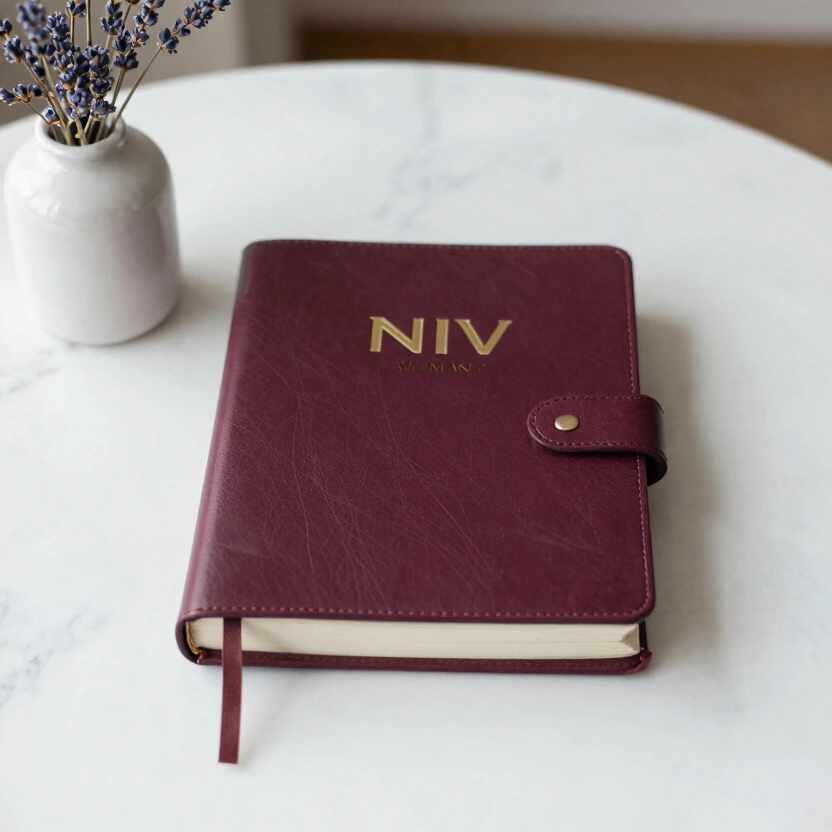
NIV The Woman's Study Bible
Study Bible designed for women with character profiles, topical articles, and devotional insights.
Check Price on AmazonAs an affiliate, we earn on qualifying purchases.
Famous Verses About Love and Relationships
6. 1 Corinthians 13:4-7
“Love is patient, love is kind. It does not envy, it does not boast, it is not proud.”
The most read passage at weddings. But Paul wrote it to a church in Corinth that was suing each other in court, competing over spiritual gifts, and splitting into factions. This wasn’t a love poem. It was a rebuke dressed in beauty. “Love keeps no record of wrongs” was addressed to people who were keeping very detailed records. The passage becomes more demanding when you know who it was written for. For the full passage and its context, see Bible verses about love.
7. 1 John 4:19
“We love because he first loved us.”
Nine words. The sequence is the point. Not “we loved God, and then he loved us back.” The direction runs one way first. This is John, writing as an old man, boiling decades of theology into a single statement about the order of operations in love.
8. Proverbs 3:5-6
“Trust in the Lord with all your heart and lean not on your own understanding; in all your ways submit to him, and he will make your paths straight.”
Solomon’s advice to his son. “Trust” — batach — means to lean into something with your full body weight. “Lean not on your own understanding” is a prohibition against making yourself the final authority on your own life. The promise — “he will make your paths straight” — uses the Hebrew yashar, which means to level or smooth, like grading a road. Not “God will show you the right path.” God will clear the path you’re already on.

Famous Verses About Strength and Peace
9. Isaiah 41:10
“So do not fear, for I am with you; do not be dismayed, for I am your God. I will strengthen you and help you; I will uphold you with my righteous right hand.”
God speaking to a nation in exile — people who had lost everything. Four promises stacked in sequence: presence, identity, strength, support. The word “strengthen” is chazaq — structural reinforcement, not emotional encouragement. And “righteous right hand” is covenant language. In the ancient Near East, the right hand of a ruler was the hand of binding oaths. God isn’t offering comfort. He’s swearing an oath. Full treatment in our Isaiah 41:10 meaning article.
10. Philippians 4:6-7
“Do not be anxious about anything, but in every situation, by prayer and petition, with thanksgiving, present your requests to God. And the peace of God, which transcends all understanding, will guard your hearts and your minds.”
Paul, in chains, writing about peace. The word “guard” — phroureo — is military. A garrison at a gate. The peace he describes doesn’t eliminate anxiety. It stations itself between you and the thoughts that would otherwise overwhelm you. This verse is the anchor of our Bible verses for anxiety collection.
10b. Isaiah 40:31
“But those who hope in the Lord will renew their strength. They will soar on wings like eagles; they will run and not grow weary, they will walk and not be faint.”
One of the most poetic expressions of strength renewal in Scripture. Isaiah spoke this to exiles in Babylon — people who had lost everything and felt permanently depleted. The eagle metaphor isn’t decorative. Eagles undergo a brutal molting process where they lose their feathers before growing new ones, a picture of biological renewal after complete vulnerability. The Hebrew word for “hope” — qavah — means to bind together with taut expectation, not wishful thinking. For a full exploration of this verse’s depth and its original context, see Isaiah 40:31 meaning.
11. Joshua 1:9
“Have I not commanded you? Be strong and courageous. Do not be afraid; do not be discouraged, for the Lord your God will be with you wherever you go.”
God to Joshua, after Moses died. The phrase “be strong and courageous” repeats four times in Deuteronomy and Joshua. The repetition isn’t lazy writing. It’s the rhetorical equivalent of gripping someone by the shoulders. And “Have I not commanded you?” — the Hebrew tsav is a military order. Courage here is not optional. It’s duty.
Famous Verses About Hope and God’s Character
12. Romans 8:38-39
“For I am convinced that neither death nor life, neither angels nor demons, neither the present nor the future, nor any powers, neither height nor depth, nor anything else in all creation, will be able to separate us from the love of God.”
Paul’s comprehensive list. He pairs opposites — death and life, present and future, height and depth — then adds a catch-all: “nor anything else in all creation.” He’s closing every escape hatch. This is a man who had been beaten, shipwrecked, imprisoned, and run out of multiple cities. He cataloged every terrible thing and concluded: none of it worked.
13. Psalm 46:10
“Be still, and know that I am God.”
Nine words. Probably the most misunderstood famous verse. “Be still” — raphah — doesn’t mean sit quietly. It means stop fighting. Let go. Cease striving. The psalm it comes from is about nations raging, kingdoms collapsing, and the earth giving way. God doesn’t say “meditate.” He says “stop trying to hold the world together. That’s my job.”
14. Matthew 11:28
“Come to me, all you who are weary and burdened, and I will give you rest.”
Jesus speaking to first-century Jews crushed under the weight of religious law — 613 commandments plus the Pharisees’ additional regulations. The “burden” wasn’t abstract. It was a system that made access to God feel impossible for ordinary people. Jesus’ offer was relief from performance-based religion. Not “try harder.” “Come.”
15. Psalm 139:14
“I praise you because I am fearfully and wonderfully made; your works are wonderful, I know that full well.”
David, writing about the intimacy of divine creation. “Fearfully made” — the Hebrew yare — means made with awe-inspiring care, the way an artisan approaches their most important work. This verse has become a cornerstone for discussions about identity and worth, particularly for people struggling with self-image. What makes it resonate isn’t the flattery. It’s the claim that the making was intentional.
What makes a Bible verse popular isn’t marketing. It’s resonance. These fifteen verses became famous because they answer the questions people carry: Am I loved? Am I safe? Does this suffering mean something? Will it end? Can I endure?
The words have been on billboards and bumper stickers and Instagram posts for so long that they can start to feel like wallpaper. But every one of them was written by someone in crisis, speaking to someone in crisis. That’s the context the popularity erased — and the context that makes them land again.
If you want to go deeper, the best Bible translation comparison can help you pick a version that reads the way you think. And NIV vs ESV compares the two translations most people choose between.

Related Articles
- Hebrews 11:1 Meaning: Now Faith Is the Substance of Things Hoped For
- Romans 8:28 Meaning: All Things Work Together for Good
- Proverbs 3:5-6 Meaning: Trust in the Lord With All Your Heart
- Romans 12:2 Meaning: Be Transformed by Renewing Your Mind
- John 14:6 Meaning: I Am the Way, the Truth, and the Life
- Matthew 6:33 Meaning: Seek First the Kingdom of God
- Galatians 5:22-23 Meaning: The Fruit of the Spirit Explained
Frequently Asked Questions
What is the most popular Bible verse of all time?
John 3:16 holds the title by most measures — most searched on Bible Gateway, most recognized in surveys, and most widely quoted in Western culture. It became a cultural icon partly through sports stadium signage in the 1970s-80s. However, Psalm 23 is the most spoken passage (especially at funerals), and Jeremiah 29:11 has surged in popularity since the early 2000s, particularly among younger readers.
What are the 5 most searched Bible verses?
Based on Bible Gateway data and Google Trends: (1) John 3:16 — God’s love. (2) Jeremiah 29:11 — plans for hope and a future. (3) Philippians 4:13 — strength through Christ. (4) Psalm 23:1 — the Lord is my shepherd. (5) Romans 8:28 — all things work together for good. The rankings shift slightly year to year, but these five have held the top positions consistently for over a decade.
Why are some Bible verses more popular than others?
Three factors drive verse popularity: brevity (short verses are easier to memorize and share), universality (they address needs everyone shares — love, fear, hope, grief), and cultural reinforcement (once a verse enters popular culture through music, signs, or social media, it compounds). The most popular verses tend to be promises rather than commands, and they address emotional needs rather than theological arguments.
What is the most quoted Bible verse at weddings?
1 Corinthians 13:4-7 — “Love is patient, love is kind” — is by far the most read passage at weddings. Genesis 2:24 (“a man shall leave his father and mother and be united to his wife”) and Ecclesiastes 4:12 (“a cord of three strands is not quickly broken”) are also popular. For a curated wedding-specific collection, see Bible verses for weddings.