
Isaiah 40:31 Meaning: Mount Up With Wings Like Eagles
Isaiah 40:31 meaning — the Hebrew behind 'mount up with wings like eagles,' who first heard it, and why the verse ends with walking, not flying.
Contents
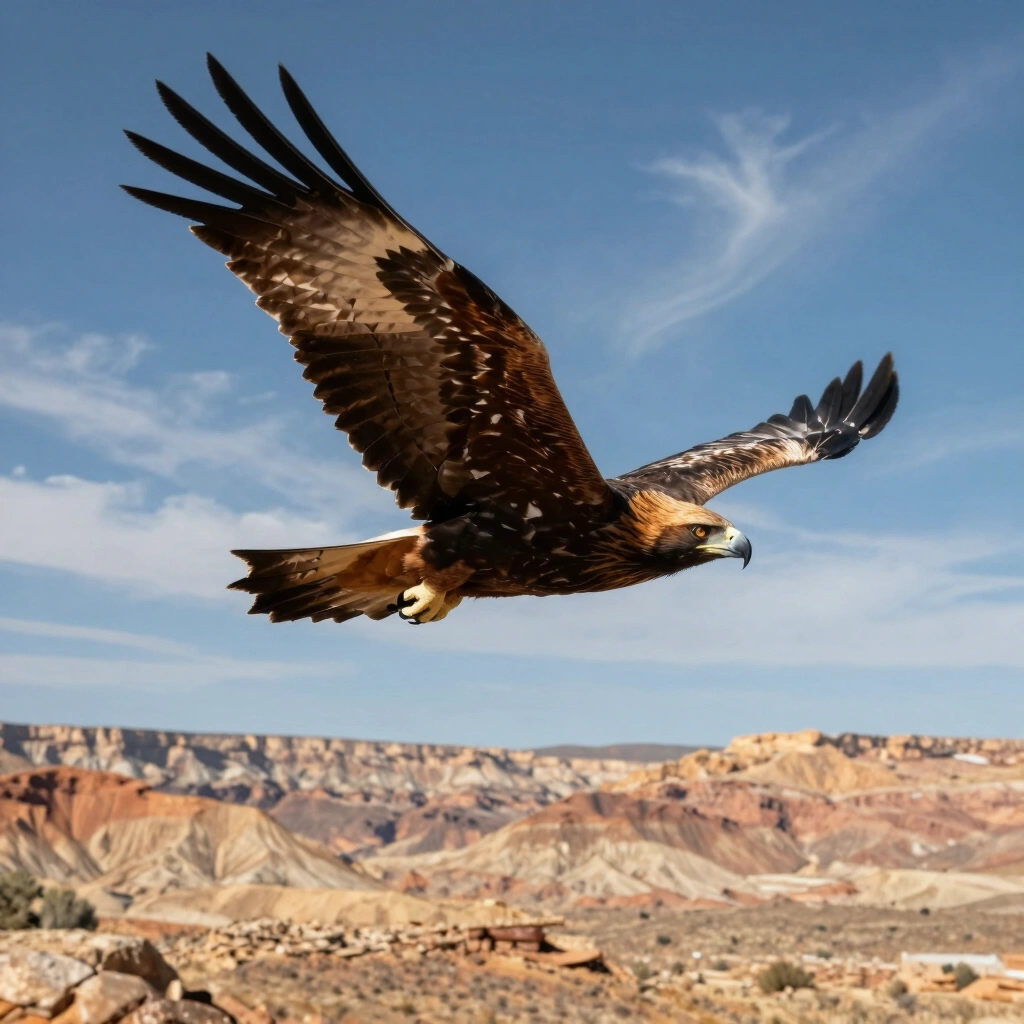
Golden eagles don’t fly into storms. They fly on them.
Ornithologists have documented this for decades — when a storm front rolls in, eagles lock their wings and use the updraft from turbulent air to rise above it. They don’t flap harder. They don’t fight the wind. They position themselves inside the force that would ground every other bird, and it lifts them higher than calm air ever could. The Hebrew word Isaiah chose for “mount up” in Isaiah 40:31 — alah — describes exactly this kind of ascent. Not powered flight. Carried rise.
That detail changes how you read the most quoted verse in the book of Isaiah. And if you’re looking for the meaning of Isaiah 40:31 right now — if this verse found you during a season where the waiting has gone on longer than you thought you could handle — the eagle image is more precise, and more comforting, than you might expect.
The Verse Itself
“But those who wait upon the Lord shall renew their strength; they shall mount up with wings like eagles; they shall run and not be weary; they shall walk and not faint.” — Isaiah 40:31 (NKJV)
The NIV translates it as “those who hope in the Lord.” The ESV uses “wait for the Lord.” The KJV says “wait upon.” Each translation captures a facet of the Hebrew — and none of them captures all of it. If this verse lives among the most popular bible verses in English, part of the reason is that translators keep trying to find the right word for what Isaiah actually said. The Hebrew won’t sit still in English.
Who First Heard These Words
Isaiah 40:31 was not written for a greeting card. It was written for people who had been told — by God, through Isaiah — that their nation would be destroyed.
The historical context matters. Isaiah ministered in Judah from roughly 740 to 680 BC, spanning the reigns of four kings. But Isaiah chapter 40 marks a dramatic shift in the book. The first 39 chapters are largely judgment. Chapter 40 opens with “Nachamu, nachamu ami” — “Comfort, comfort my people.” The change is so abrupt that scholars have debated the authorship for centuries. What’s undisputed is the audience: Israelites facing — or already living in — Babylonian exile.
These were people who had lost their temple, their land, their political identity, and any reasonable expectation that things would improve within their lifetimes. The exile lasted seventy years. Most of the people who heard these words would die before the return. When Isaiah said “those who wait upon the Lord,” he was talking to people for whom waiting was not a season. It was the entire shape of their remaining life.
That’s the ground this verse grows from. Not impatience with a delayed promotion. Not frustration with a slow answer to prayer. National destruction and multi-generational displacement. The scale of the original context makes the promise larger, not smaller.
The Hebrew Behind Isaiah 40:31
Three Hebrew words carry the weight of this verse, and each one does something the English translation flattens.
Qavah — “Wait” That Isn’t Passive
The word translated “wait” is qavah (קָוָה). Its root meaning is to twist or bind, like strands of cord wound together into rope. A person who qavah on God isn’t sitting passively in a waiting room. They’re binding themselves to something fixed — stretching toward it, staying attached under tension.
This is why the NIV translates qavah as “hope” rather than “wait.” Both are present in the word. To qavah is to strain toward the object of your trust the way a rope strains under load. It holds. But it holds under pressure, not in comfort. If you’ve ever prayed the same prayer for months or years and refused to stop — that’s qavah. That’s what Isaiah 40:31 means by waiting.
Chalaph — “Renew” That Means Exchange
“Renew their strength” sounds like recharging a battery. But chalaph (חָלַף) doesn’t mean refill. It means pass through, exchange, replace. The old weariness passes out. New strength passes in. It’s the same word used in Job 14:7 for a tree sprouting again after being cut down — not the old growth revived, but entirely new growth from the same root.
The Isaiah 40:31 meaning here is specific: God does not patch your existing strength. He replaces it with His. The exhaustion you carried in doesn’t get topped off. It gets swapped out. Chalaph is a transaction, not a tune-up.
Eber — Wings Built for Sustained Flight
The word for “wings” — eber (אֵבֶר) — refers specifically to the primary flight feathers. Not decorative plumage. Not the full spread of wing. The pinion feathers that generate lift during sustained soaring. Eagles use these feathers to ride thermal columns for hours without flapping. The image Isaiah chose isn’t about dramatic takeoff. It’s about endurance in the air — the ability to stay aloft long after muscle power would have given out.
This connects back to the eagle behavior in the opening. The eber are what let the eagle lock its wings and rise on turbulence. Isaiah’s metaphor is precise: the person who binds themselves to God (qavah) receives exchanged strength (chalaph) that functions like the pinion feathers (eber) of an eagle — designed not for bursts of power but for sustained, carried flight.
Isaiah 40 as a Whole
Isaiah 40:31 is the last verse of the chapter, which means it’s the destination — the place where the argument lands. And the argument that precedes it is worth understanding.
Chapter 40 opens with comfort (v.1-2), then announces a voice crying in the wilderness to prepare the way (v.3-5) — the passage John the Baptist later claimed. It moves through a meditation on human frailty — “all people are like grass” (v.6-8) — and then builds to a sustained portrait of God’s power. God measures the oceans in the hollow of His hand (v.12). He weighs the mountains on scales (v.12). The nations are like a drop in a bucket before Him (v.15).
Then verse 27: “Why do you complain, Jacob? Why do you say, Israel, ‘My way is hidden from the Lord; my cause is disregarded by my God’?” The exiles felt forgotten. Unseen. As if God had moved on. And Isaiah’s response is not “you shouldn’t feel that way.” It’s: look at who you’re talking about. The God who made the stars and calls each one by name (v.26) does not grow tired. Does not grow weary. His understanding no one can fathom (v.28).
And then — verse 31. After the entire cosmic argument: those who qavah on this God will chalaph their strength. The verse gains its full weight only when you read it as the final sentence of a chapter-length case for God’s sufficiency. It’s not a standalone inspirational quote. It’s a verdict.
Some people keep this verse where they’ll see it before the day’s weight arrives — not as decoration but as structural reinforcement for the hours ahead.
Isaiah 40:31 — Keep It Close

Be Strong and Courageous Farmhouse Wall Sign
Large farmhouse-style wooden sign with Joshua 1:9 verse, distressed finish for rustic home decor.
Check Price on AmazonAs an affiliate, we earn on qualifying purchases.

Bible Verse Wall Art Christian Inspirational Poster
Inspirational Bible verse wall art poster for home or office.
Check Price on AmazonAs an affiliate, we earn on qualifying purchases.
OAK Wood Identity in Christ Wall Art
Handcrafted oak wood wall art featuring Identity in Christ Scripture references.
Check Price on AmazonAs an affiliate, we earn on qualifying purchases.
What This Verse Promises — and What It Doesn’t
Here is the detail in Isaiah 40:31 that almost every commentary mentions but almost no one explains well: the verse descends.
Mount up with wings like eagles. Then run and not be weary. Then walk and not faint. The order moves from the spectacular to the ordinary. From soaring to running to walking. Most readers assume this is ascending — each promise bigger than the last. It’s the opposite. The climax is at the bottom.
For exiles who would spend decades in Babylon, soaring was rare. Running was occasional. Walking — putting one foot in front of the other in a life that showed no signs of changing — was every single day. The promise that mattered most wasn’t the eagle flight. It was the endurance to keep walking when nothing in the landscape suggested the exile would ever end.
That’s the Isaiah 40:31 meaning for anyone in a long season. The verse doesn’t promise you’ll always feel powerful. It promises that when the power is gone — when soaring is a memory and running is beyond you — you will still walk. And you will not collapse. The endurance to keep walking is the miracle.
People Who Lived This Verse
Corrie ten Boom
Corrie ten Boom survived Ravensbrück concentration camp after her family was arrested for hiding Jews in their Haarlem home during World War II. Her sister Betsie died in the camp. Corrie was released due to a clerical error — the week before all women her age were sent to the gas chambers. She spent the rest of her life traveling the world talking about forgiveness. She quoted Isaiah 40:31 repeatedly, particularly the image of exchanged strength. “I have experienced that the most,” she once said. “His strength for my weakness.”
Eric Liddell
The Olympic runner immortalized in Chariots of Fire spent the last years of his life in a Japanese internment camp in China during World War II. He organized games for the children, taught Bible classes, and was known for a calm endurance that baffled his fellow prisoners. He died in the camp in 1945 of a brain tumor, five months before liberation. Friends found a poem in his papers after his death with Isaiah 40:31 written at the top. The runner — the man famous for speed — had underlined “walk and not faint.”
The Exiles Themselves
The Babylonian exile lasted from 586 to 516 BC. Seventy years. The people who heard Isaiah’s prophecy of comfort did not, for the most part, live to see its fulfillment. They raised children in a foreign country. They kept their faith in a place with no temple. They walked. And the ones who held onto qavah — who bound themselves to the promise even when the promise seemed impossibly far — were the ones whose grandchildren eventually returned to Jerusalem. The endurance of an entire generation is the largest fulfillment of this verse in the Old Testament.

The meaning of Isaiah 40:31 is not about trying harder. It’s about binding yourself to the God who doesn’t get tired — and receiving His strength in exchange for yours. The eagle doesn’t fight the storm. The runner eventually slows. But the walker, sustained by chalaph strength, keeps going. One step. Then another. In a life that may not change on your timetable.
If you’re in a waiting season right now — a long one, the kind where you can’t see the end — this verse was written for you more than for anyone else. Not the person soaring. Not the person running. The person walking. And Scripture has more to say about the endurance that carries you through the longest stretches: bible verses about strength and bible verses about perseverance hold the rest of that thread.
Frequently Asked Questions
What is the meaning of Isaiah 40:31?
Isaiah 40:31 promises that people who qavah — wait on, hope in, bind themselves to — God will receive exchanged strength. The Hebrew chalaph means God replaces your exhaustion with His energy, not that He tops off what you already have. The verse was originally spoken to Israelites facing or enduring Babylonian exile — a multi-generational displacement. The promise descends from soaring (eagles) to running to walking, with the climactic promise being the most ordinary: you will walk and not faint. For people in a long waiting season, the endurance to keep going is the central gift.
What does it mean to wait upon the Lord?
The Hebrew qavah means far more than passive waiting. Its root describes twisting or binding — like strands of cord wound together into rope. To wait upon the Lord is to strain toward Him under tension, maintaining attachment even when the waiting is painful and the outcome is invisible. It carries both hope and endurance simultaneously. In the context of Isaiah 40, the exiles were waiting not for days but for decades. Qavah was the posture of an entire lifetime of trust.
What does “mount up with wings as eagles” mean?
Eagles are slope-soarers — they lock their wings and ride storm updrafts rather than fighting the wind. The Hebrew eber refers specifically to the primary flight feathers used in sustained soaring, and alah describes a carried ascent rather than powered flight. Isaiah’s image is of a person lifted not by their own effort but by the force of God underneath them. The eagle doesn’t generate the lift. The storm does. The eagle’s job is to position itself correctly — which, in the verse’s logic, means qavah, binding yourself to the Lord.
Who wrote Isaiah 40?
Isaiah 40 is attributed to the prophet Isaiah, son of Amoz, who ministered in Judah from approximately 740 to 680 BC. Scholars have long debated whether chapters 40-66 were written by the same author as chapters 1-39, since the tone shifts dramatically from judgment to comfort. Conservative scholarship attributes the entire book to one prophet writing under divine inspiration — with chapters 40-66 looking forward prophetically to the exile and return. Critical scholarship often identifies a second author (“Deutero-Isaiah”) writing during or after the exile itself. In either case, the theological content of Isaiah 40:31 and its message of exchanged strength through waiting remain unchanged.