
Best Bible Translation Compared: An Honest Guide for Real Readers
The best bible translation depends on what you need it for. This comparison covers NIV, ESV, KJV, NLT, NASB, and more — with real examples showing how they differ.
Contents
I own seven Bibles. Different translations, different bindings, different margin notes from different seasons of my life. And the one I reach for most often isn’t the most accurate or the most elegant. It’s the one I can read at 6 a.m. before coffee kicks in — which, for me, is the NLT. That won’t be your answer. It shouldn’t be. The best bible translation is the one you’ll actually read, and that depends on who you are, why you’re reading, and what you need the text to do.
This guide compares the major English translations — not to crown a winner, but to help you find the one that fits. Because the differences between them aren’t trivial, and choosing the wrong translation for your purpose is like wearing running shoes to a formal dinner. Technically functional. Practically wrong.
How Bible Translation Actually Works
Every translation makes a fundamental choice: stay as close as possible to the original Hebrew and Greek words (formal equivalence), or translate the original meaning into natural English (dynamic equivalence). Neither approach is wrong. They’re solving different problems.
Formal equivalence (word-for-word) preserves the grammar, syntax, and vocabulary of the original languages. You get closer to what the text says. The trade-off: sentences can feel stiff, and cultural idioms that made perfect sense in Hebrew may confuse a modern English reader.
Dynamic equivalence (thought-for-thought) prioritizes communicating what the original author meant in language a modern reader understands without a dictionary. The trade-off: the translator’s interpretation gets baked into the text. You’re trusting their judgment about meaning, not just vocabulary.
Most translations fall somewhere on a spectrum between these two poles. Understanding where each sits changes how you read them.
The Major Translations Compared
ESV (English Standard Version)
Philosophy: Formal equivalence — leans heavily toward word-for-word. Reading Level: Grade 10-11. Best for: Bible study, theological precision, memorization.
The ESV was published in 2001 by a team of over 100 scholars, using the 1971 RSV as its starting point. It reads like a polished academic paper — precise, careful, sometimes stiff. When Paul wrote a 67-word sentence in Greek, the ESV gives you a 67-word sentence in English. That fidelity is its strength and its limitation.
Where the ESV shines is consistency. The same Greek or Hebrew word gets translated the same way throughout the text, which makes word studies and cross-referencing reliable. Where it struggles: poetry. The Psalms in the ESV can read like legal documents. Songs should sing.
Example — Philippians 4:13: ESV: “I can do all things through him who strengthens me.”
NIV (New International Version)
Philosophy: Balance between word-for-word and thought-for-thought. Reading Level: Grade 7-8. Best for: General reading, church services, devotional use.
The NIV is the best-selling modern English translation — and it earned that position by being readable without being loose. The 2011 update (the current edition) uses inclusive language where the original text addresses mixed audiences (“brothers and sisters” instead of “brethren”), which some readers appreciate and others resist.
The NIV makes more interpretive choices than the ESV. Where a Greek sentence is ambiguous, the ESV will often preserve the ambiguity; the NIV will pick what the translators think it means. That makes it easier to read and harder to study at the granular level. For a detailed comparison of NIV and ESV side by side, I’ve written a separate piece.
Example — Philippians 4:13: NIV: “I can do all this through him who gives me strength.”
KJV (King James Version)
Philosophy: Formal equivalence. Reading Level: Grade 12+ (due to archaic vocabulary). Best for: Literary appreciation, memorization in traditional settings, comparison study.
Published in 1611 by 47 scholars under King James I of England. The KJV shaped the English language more than any other book. Phrases like “a fly in the ointment,” “by the skin of my teeth,” and “the salt of the earth” all come from the KJV. Its literary quality is unmatched — Psalm 23 in the KJV is still the version most people quote at funerals.
The limitation: the English is four hundred years old. “Suffer the little children” doesn’t mean the children are suffering — it means “allow them to come.” “Charity” means love, not giving money. And the KJV was translated from manuscripts that were less complete than what’s available today. Modern translations work from older, more reliable Greek and Hebrew texts.
Example — Philippians 4:13: KJV: “I can do all things through Christ which strengtheneth me.”
NLT (New Living Translation)
Philosophy: Dynamic equivalence — thought-for-thought. Reading Level: Grade 6. Best for: New believers, daily reading, understanding the meaning on first pass.
The NLT started as a revision of The Living Bible (a paraphrase) but became a full translation using 90 scholars working from the original languages. It reads the way people actually talk. Some scholars consider it too interpretive — the translators sometimes make choices about meaning that more formal translations leave to the reader. But for someone who has never read the Bible before, or for someone who has tried the ESV and bounced off the syntax, the NLT removes the barrier.
Example — Philippians 4:13: NLT: “For I can do everything through Christ, who gives me strength.”
NASB (New American Standard Bible)
Philosophy: Strict formal equivalence — the most word-for-word major translation. Reading Level: Grade 11-12. Best for: Serious study, seminary, original language comparison.
The NASB (updated in 2020 as NASB2020) is the translation you use when accuracy matters more than flow. It preserves verb tenses from the Greek that other translations smooth over. It italicizes words added by translators that don’t appear in the original text — so you can see exactly where interpretation entered. Pastors and seminary students use it as a study baseline. Everyone else finds it stiff.
Example — Philippians 4:13: NASB: “I can do all things through Him who strengthens me.”
The Message
Philosophy: Paraphrase. Reading Level: Grade 4-5. Best for: Fresh perspective, devotional reading, breaking out of familiar phrasing.
Eugene Peterson spent ten years translating The Message from the original languages — but into American street English, not literary English. It’s not a translation in the technical sense. It’s one pastor’s interpretive rendering. Some passages are brilliant. Some are questionable. It should never be your only Bible, but reading a familiar passage in The Message can show you something you’ve been reading past for twenty years.
Example — Philippians 4:13: Message: “Whatever I have, wherever I am, I can make it through anything in the One who makes me who I am.”
Recommended Resources

NIV Study Bible, Fully Revised Edition, Hardcover
Comprehensive study Bible with over 20,000 notes, book introductions, and full-color maps.
Check Price on AmazonAs an affiliate, we earn on qualifying purchases.
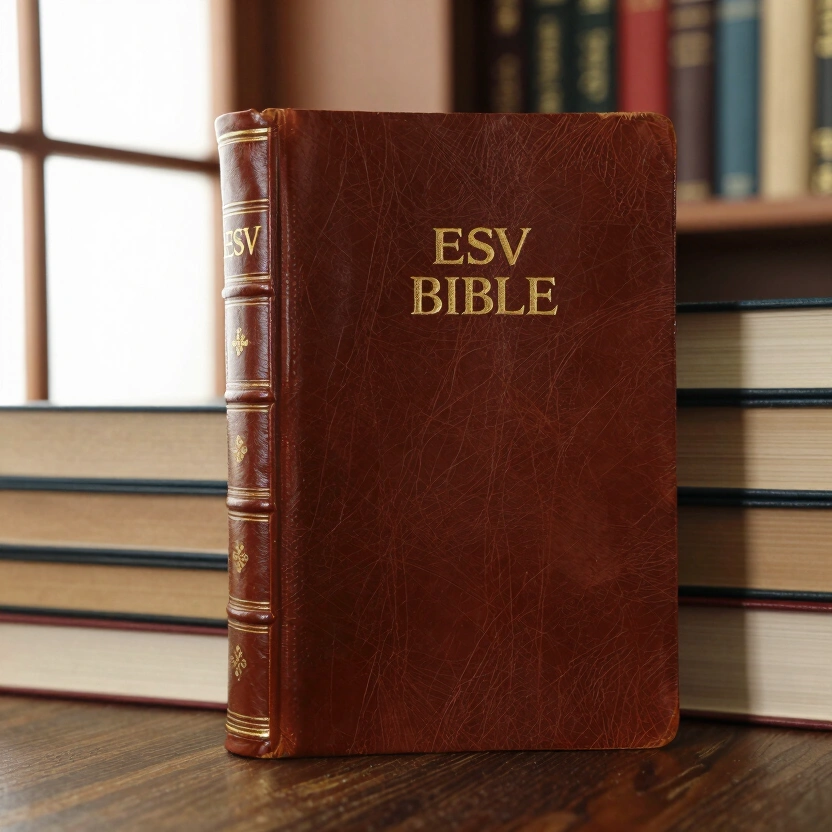
ESV Study Bible, Large Print
Large-print ESV study Bible with 20,000+ notes, charts, and theological articles.
Check Price on AmazonAs an affiliate, we earn on qualifying purchases.
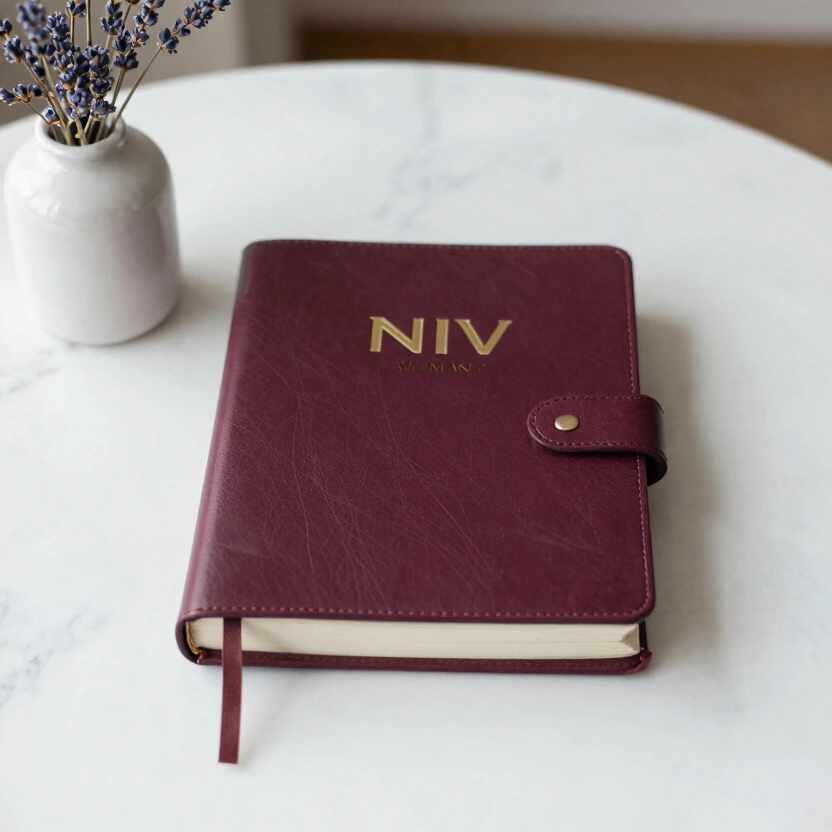
NIV The Woman's Study Bible
Study Bible designed for women with character profiles, topical articles, and devotional insights.
Check Price on AmazonAs an affiliate, we earn on qualifying purchases.

Which Translation Should You Choose?
The honest answer depends on three factors.
If you’ve never read the Bible before: Start with the NLT or NIV. Readability matters more than precision when you’re building familiarity. You can always add a more formal translation later.
If you’re doing serious Bible study: Use the ESV or NASB as your primary, with the NIV or NLT alongside for readability comparison. The differences between translations often reveal the ambiguities in the original text — and those ambiguities are where the interesting theology lives.
If you grew up with the KJV: You don’t have to leave it. But add a modern translation for passages where the archaic English obscures the meaning. Using both isn’t disloyalty. It’s scholarship.
If you’re choosing for a church: The NIV and ESV are the two most common church translations in English-speaking congregations. The NIV reads aloud better. The ESV studies better. Both are solid.
If you want all of the above: A study Bible in the ESV or NIV with cross-references, footnotes, and alternate translations in the margins gives you the most information per page. The ESV Study Bible and NIV Study Bible are both excellent. The verse explanations throughout this site draw from both — if you’ve read our treatment of the most popular Bible verses, you’ve already seen how translation differences change meaning.
The Translation Spectrum (Visual Guide)
Here’s how the major translations line up from most literal to most interpretive:
Word-for-Word → → → Thought-for-Thought → → → Paraphrase
NASB → ESV → KJV → NKJV → CSB → NIV → NLT → The Message
The further right you go, the easier to read. The further left, the closer to the original language structure. Neither end is superior. They’re different tools for different tasks.

Two Translations I’d Avoid
The Passion Translation (TPT): Marketed as a translation but functions as one person’s theological interpretation. Scholars from across the spectrum — conservative and liberal — have criticized it for adding meaning that isn’t present in the original languages. Not recommended as a study Bible.
Any AI-generated translation: They exist now. They’re getting better. They’re still not reliable for Scripture because they can’t make the theological judgment calls that human translators debate for years.
You don’t need to pick one translation and marry it. I read the NLT in the morning for devotion, the ESV when I’m studying, and the KJV when I want the poetry. That’s not inconsistency. It’s what scholars call “Bible triangulation” — comparing multiple translations to get closer to the original meaning than any single version can take you.
Pick one and start reading. You can switch later. The worst translation is the one sitting on a shelf unopened.
Frequently Asked Questions
What is the most accurate Bible translation?
The NASB (New American Standard Bible) is considered the most strictly word-for-word English translation. The ESV is a close second with better readability. “Accuracy” depends on your definition — the NASB is the most literal, but the NIV may more accurately convey the meaning of idiomatic expressions that lose their sense in literal translation. No translation is 100% accurate because Hebrew and Greek don’t map perfectly onto English.
Is the KJV the best Bible translation?
The KJV is the most historically influential and arguably the most beautiful English Bible. It’s not the most accurate by modern standards — it was translated from fewer and later manuscripts than what scholars have today. The KJV remains excellent for memorization, literary study, and worship. For understanding what the text means, pair it with a modern translation like the NIV or ESV.
What Bible translation do most churches use?
The NIV is the most widely used Bible in English-speaking churches worldwide, followed by the ESV and the KJV. The trend has shifted: twenty years ago, KJV dominated. Today, the NIV and ESV have overtaken it in most Protestant denominations. Catholic churches typically use the NABRE (New American Bible Revised Edition).
Should I use a study Bible?
If you want to understand context, history, and cross-references while you read — yes. The ESV Study Bible is the most comprehensive single-volume resource available. The NIV Study Bible is more accessible. The Life Application Study Bible (available in multiple translations) focuses on practical application rather than academic commentary. The investment is worth it if you’re reading regularly.